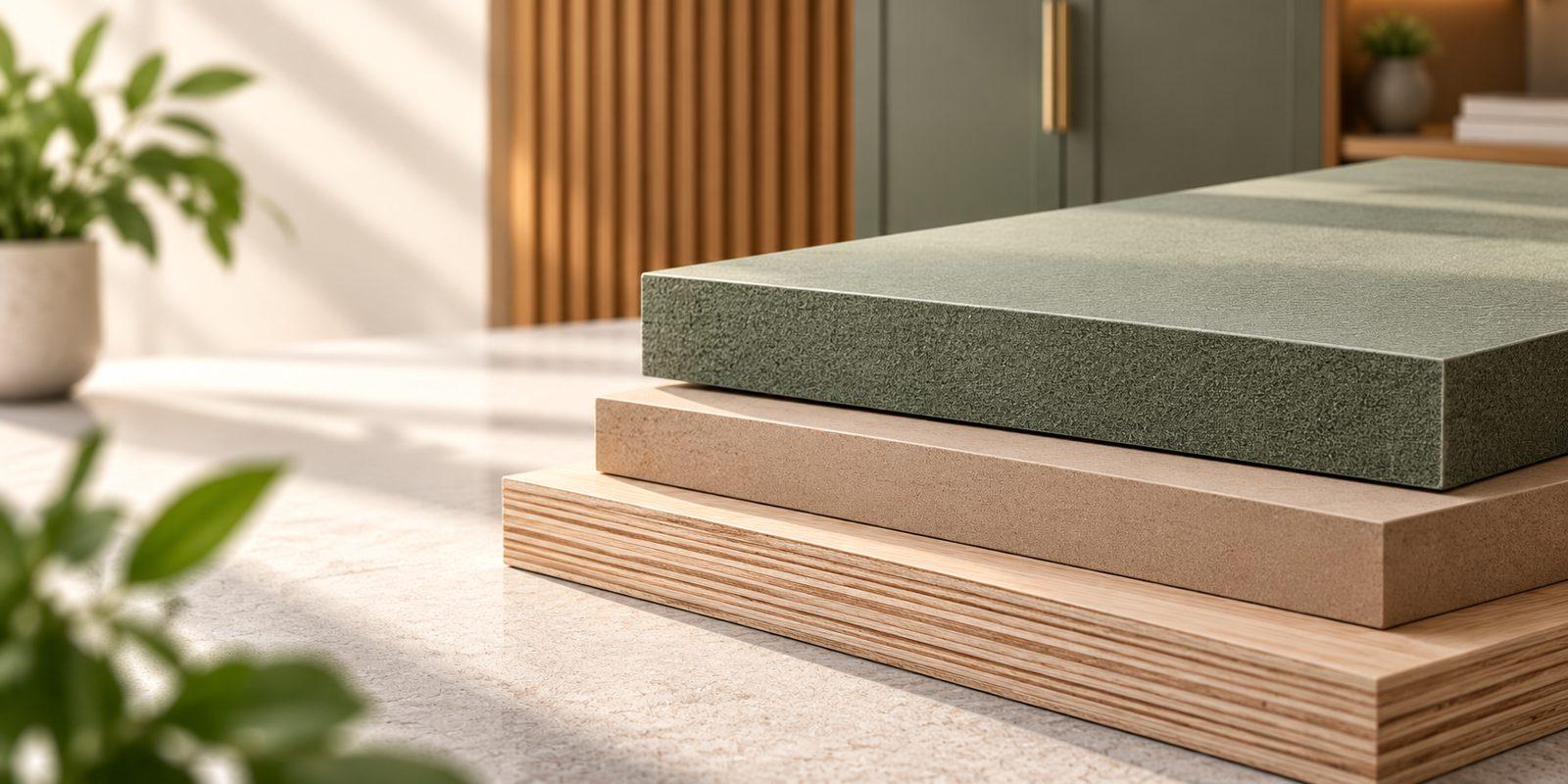
Know Your Materials
Why HDMR Boards Are Quietly Replacing Both MDF and Plywood
29 Oct 2026 · Kyzo
HDMR isn’t trending because it’s new.
It’s trending because it solves problems that MDF and plywood couldn’t fully crack.
Interior designers today aren’t just asking “Is it strong?”
They’re asking “Will this survive kitchens, CNC cutting, PU paint, and client usage — together?”
That’s exactly where HDMR boards stand out.
HDMR Is Not “Just Better MDF”
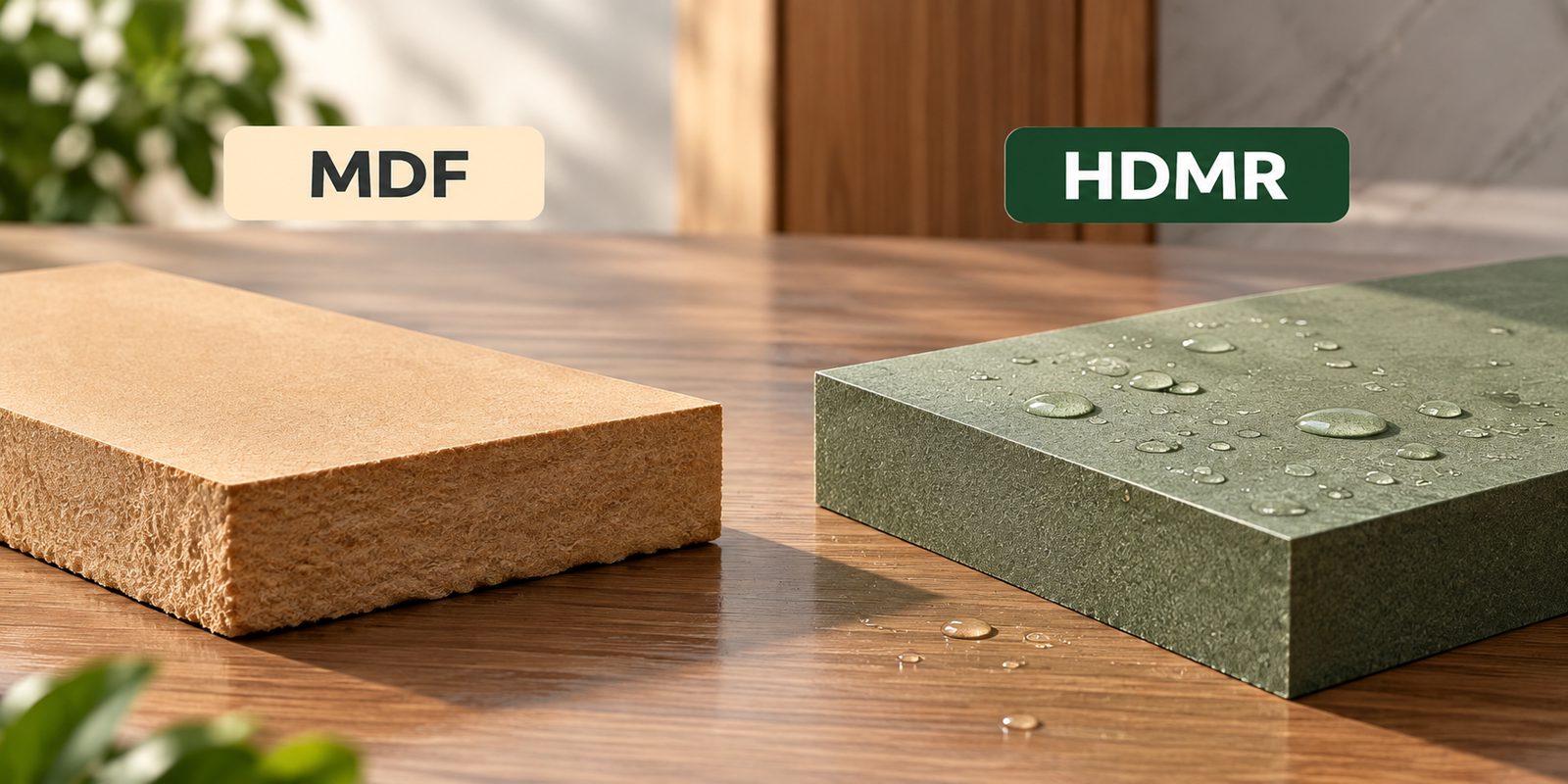
One common misconception: HDMR is premium MDF.
Reality: HDMR is engineered differently from the inside out.
What makes it unique:
• Much higher density than regular MDF
• Special moisture-resistant resins
• Tighter fiber compression
• Stronger internal bonding
This changes how the board behaves on site — not just how it looks.
Why Designers Prefer HDMR for Kitchens & Shutters

Kitchens face steam, heat, oil, and daily usage. Regular MDF struggles here. Plywood survives moisture but compromises on finish.
HDMR sits right in the sweet spot:
• Handles humidity better than MDF
• Takes PU and laminate finishes smoother than plywood
• Stays dimensionally stable after CNC cutting
• Holds screws and hardware firmly over time
That’s why HDMR is now widely used for kitchen shutters, vanity units, and utility furniture.
CNC + HDMR = Cleaner Execution
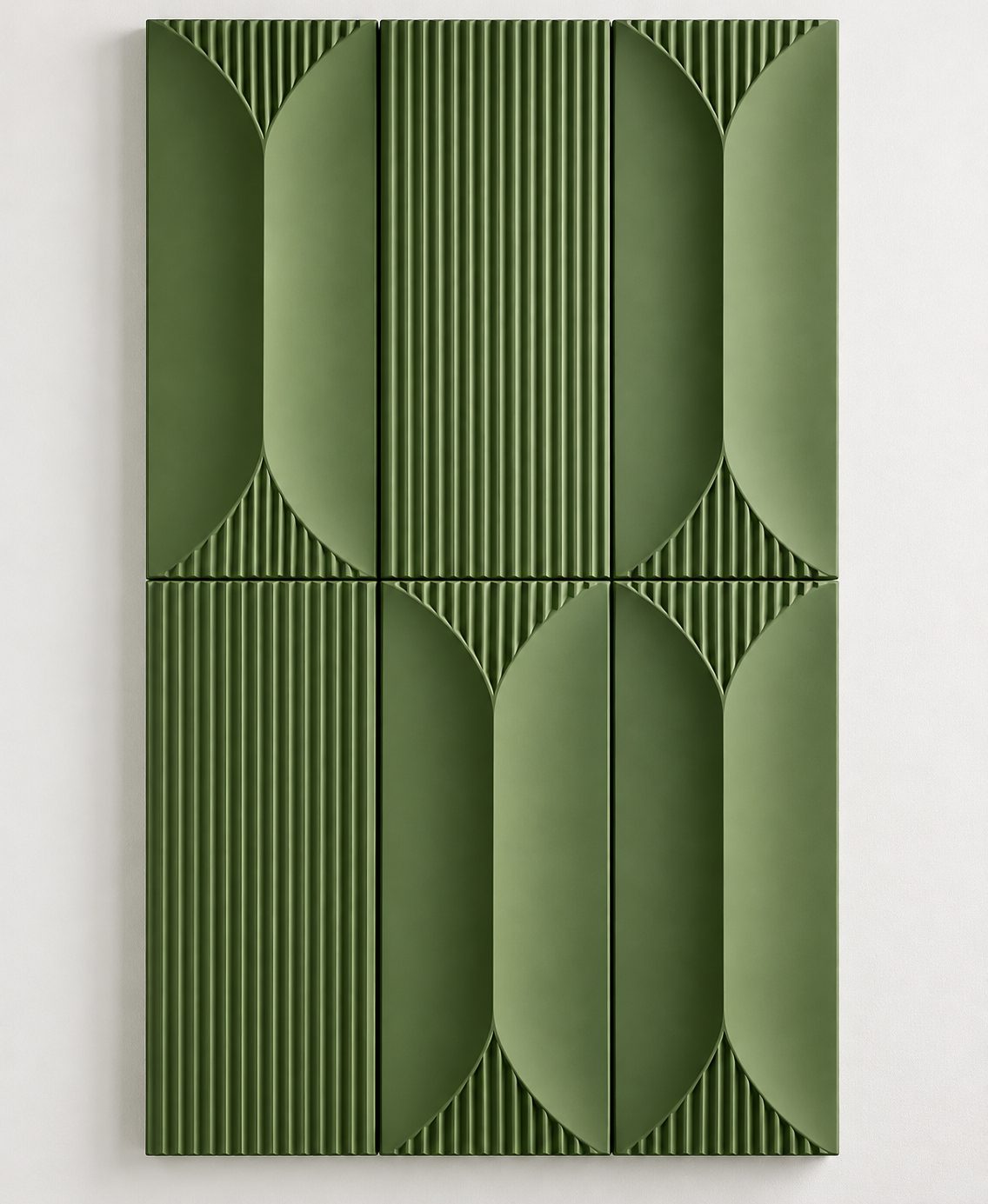
One reason HDMR searches have exploded is modular factories.
Designers using CNC notice:
• Sharper grooves and flutes
• Less edge chipping
• Uniform depth in routed patterns
• Faster finishing cycles
For fluted shutters, grooved panels, and modern designs, HDMR gives predictable results — something contractors value deeply.
The PU Paint Advantage
PU finishes magnify surface flaws.
HDMR’s dense, smooth structure allows:
• Even paint absorption
• Minimal grain telegraphing
• Cleaner matte & high-gloss results
This makes it ideal for premium, painted interiors where plywood often needs heavy surface correction.
Where HDMR Should (and Shouldn’t) Be Used
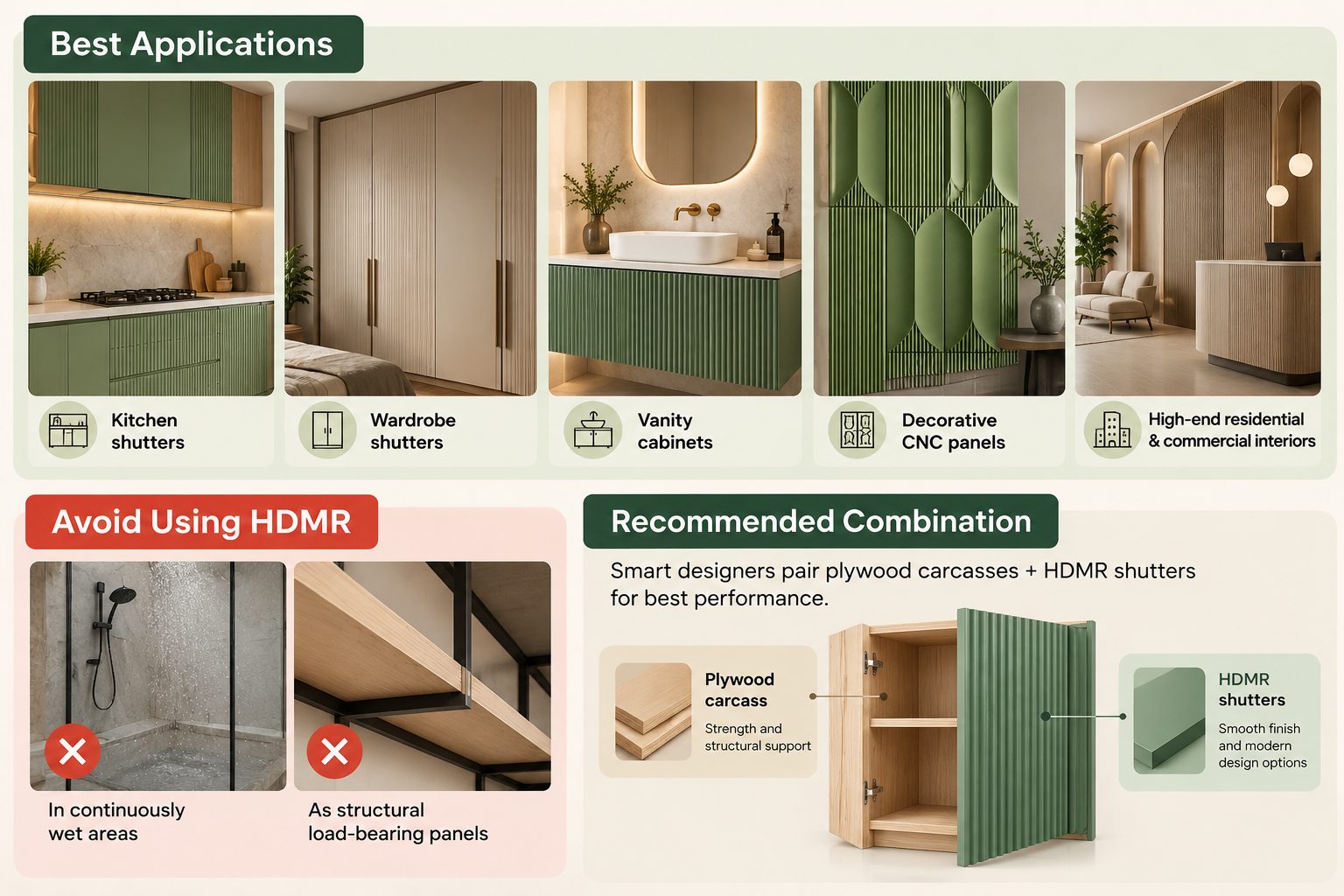
Best applications
• Kitchen shutters
• Wardrobe shutters
• Vanity cabinets
• Decorative CNC panels
• High-end residential & commercial interiors
Avoid using HDMR
• In continuously wet areas
• As structural load-bearing panels
Smart designers pair plywood carcasses + HDMR shutters for best performance.
Why HDMR Is a “Low-Complaint” Material
Designers who switch to HDMR report:
• Fewer swelling complaints
• Better finish consistency
• Less carpenter rework
• Fewer post-handover calls
That’s not marketing — that’s execution reliability.
Explore HDMR Boards at KYZO for Professional Projects
HDMR Boards
See AllFAQs
What is the difference between HDMR, MDF and plywood?
HDMR boards are high-density, moisture-resistant engineered boards with smooth surfaces. MDF is commonly used for decorative furniture, while plywood is made from bonded wood veneers and is valued for its strength and versatility.
Why are HDMR boards preferred for modular kitchens?
HDMR boards offer better moisture resistance than standard MDF, good screw-holding capacity, and smooth surfaces suitable for laminates and PU paint finishes. They are commonly used for kitchen shutters and cabinet components.
Are HDMR boards better than plywood?
Not in every application. HDMR is suitable for smooth, painted, and CNC-routed shutters, while plywood is often preferred for cabinet carcasses and applications requiring its structural properties. The right choice depends on the project and moisture exposure.
Where can HDMR boards be used in interiors?
HDMR boards are commonly used for kitchen shutters, wardrobe shutters, vanity cabinets, decorative CNC panels, and painted furniture. They are generally not recommended for continuously wet areas or structural load-bearing applications.