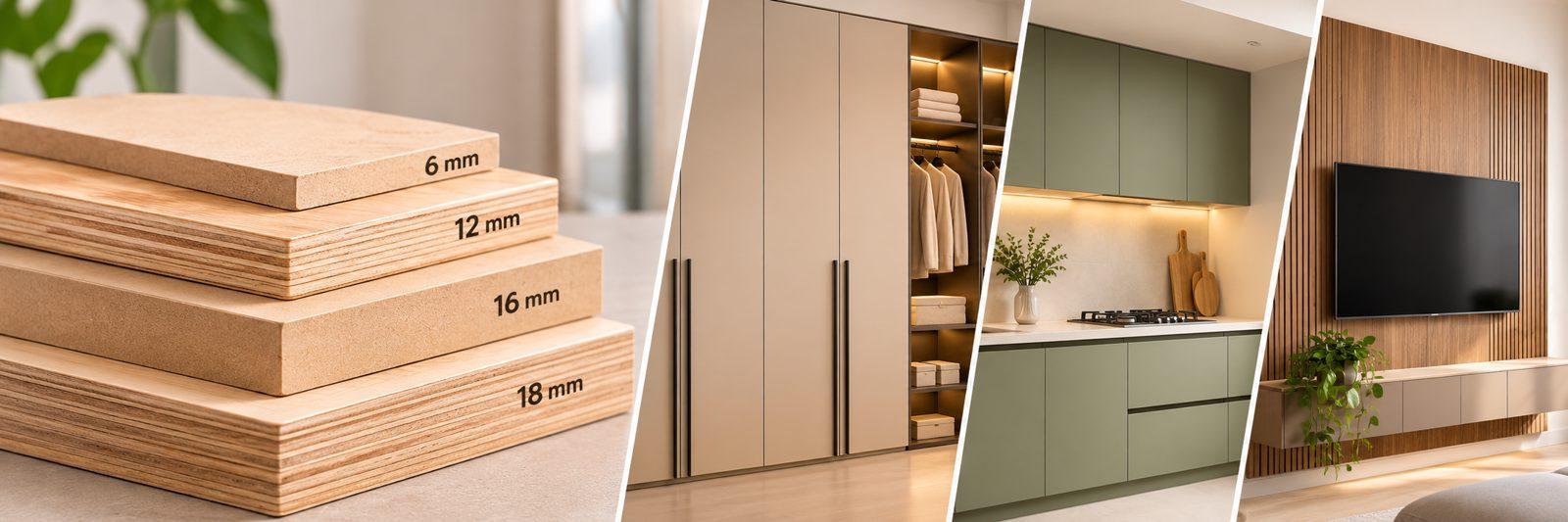
Which Board Thickness Should You Use? 6mm, 12mm, 16mm, 18mm Explained
25 Nov 2026 · Kyzo
Choosing the right board thickness is essential for building durable and functional furniture. Whether you're designing a modular kitchen, wardrobe, TV unit or office storage, the thickness of the board affects its strength, stability, weight and overall finish. Common options such as 6mm, 12mm, 16mm and 18mm serve different purposes. While thinner boards are generally used for back panels and lightweight components, thicker boards are preferred for shutters, shelves and furniture structures.
The choice also depends on the material. Plywood, MDF and PVC boards have different properties, making it important to select the right combination of thickness and material for each application.
1. 6mm Boards – For Back Panels and Lightweight Applications
6mm boards are commonly used for concealed and non-load-bearing furniture components.
Common applications:
Wardrobe and cabinet back panels.
TV unit back panels.
Lightweight storage components.
2. 12mm Boards – For Partitions and Decorative Applications
12mm boards are suitable for several internal furniture components and decorative designs. MDF is particularly popular for CNC-cut patterns and fluted panels.
Common applications:
Internal partitions and dividers.
Selected drawer components.
CNC-cut decorative panels.
Office partitions and storage.
Material options: MDF, Plywood and suitable PVC Boards.
3. 16mm Boards – A Common Choice for Modular Furniture
16mm is widely used in modular furniture because it offers a practical balance between thickness, weight and material usage.
Common applications:
Wardrobe shutters and panels.
Kitchen cabinets.
Storage units and office furniture.
Shelves with appropriate support.
Material options: BWP Plywood, MDF and suitable PVC Boards.
4. 18mm Boards – For Applications Requiring Greater Rigidity
18mm boards are commonly considered for larger panels and furniture components that require additional thickness and rigidity.
Common applications:
Kitchen and wardrobe shutters.
Bookshelves and storage units.
TV unit components.
Bed storage structures.
5. Quick Guide to Board Thickness
Application | Common thickness |
|---|---|
Wardrobe back panels | 6mm |
TV unit back panels | 6mm |
Internal partitions | 12mm |
CNC decorative panels | 12mm–16mm |
Wardrobe components | 16mm |
Kitchen cabinets | 16mm–18mm |
Large furniture panels | 18mm |
These are general guidelines. Actual thickness requirements depend on panel dimensions, support, expected load and product specifications.
6. Factors to Consider Before Choosing
Before selecting a board, consider:
Application: Is it for a back panel, shutter, shelf or structural component?
Material: Plywood, MDF and PVC have different properties and applications.
Moisture exposure: Choose a suitable grade for kitchens, bathrooms and utility areas.
Finishing: Consider whether the board will receive laminate, veneer, paint or a pre-applied finish.
Hardware: Check compatibility with hinges, screws and other fittings.
Conclusion
Choosing the right board thickness helps balance furniture strength, functionality, appearance and material cost. While 6mm and 12mm boards are commonly used for lighter applications, 16mm and 18mm options are frequently selected for modular furniture components.
At KYZO, you can explore plywood, MDF and PVC boards from Khidki and other established brands across different thickness options, making it easier to find suitable materials for your interior projects.
FAQs
What is 6mm plywood commonly used for?
6mm plywood is generally used for wardrobe back panels, TV unit backs and other lightweight, non-load-bearing furniture applications.
Can MDF and plywood be used in the same thickness for furniture?
Yes. MDF and plywood are available in similar thickness options, but their properties differ. MDF is often preferred for smooth surfaces and decorative machining, while plywood is commonly used for furniture construction. The choice depends on the application.
Which board thickness is suitable for kitchen cabinets?
16mm and 18mm boards are commonly considered for kitchen cabinets. The choice depends on the cabinet design, expected load, support and moisture exposure. Suitable moisture-resistant materials should be selected for kitchen applications.
How do I choose between plywood, MDF and PVC boards?
Choose based on the application and environment. Plywood is widely used for furniture construction, MDF is suitable for smooth finishes and decorative designs, while PVC boards are considered for selected moisture-prone applications.