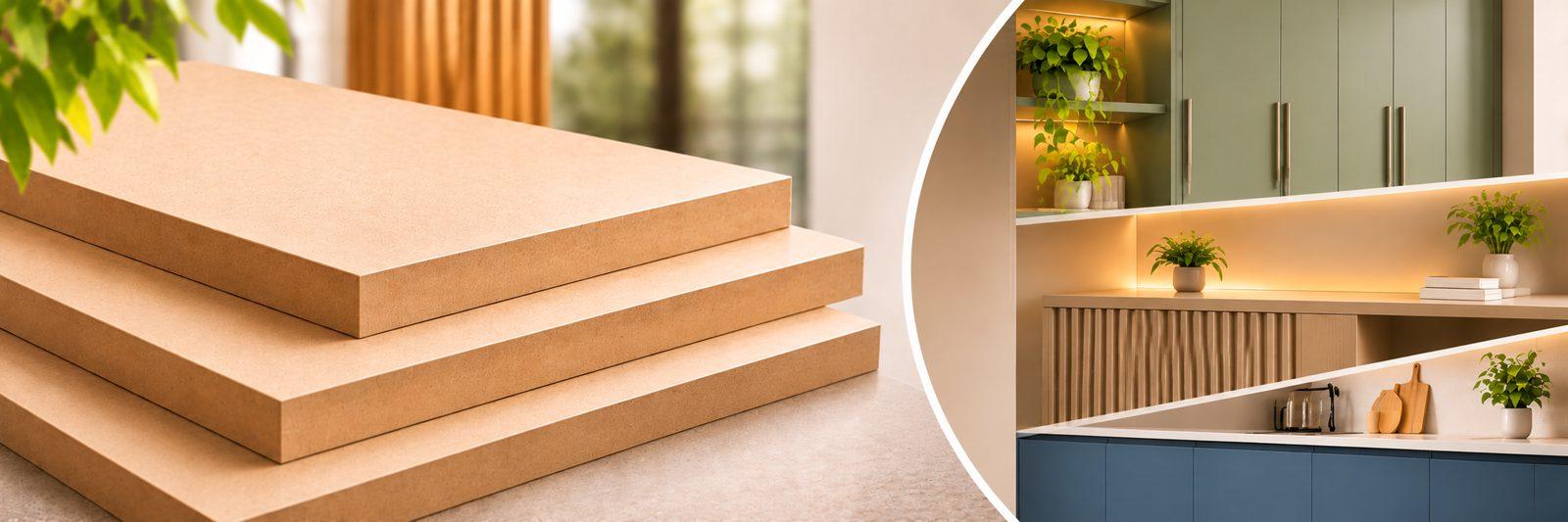
Tips for Buying MDF Sheets: Factors to Consider When Selecting the Right Material
27 Nov 2026 · Kyzo
Medium Density Fibreboard (MDF) is widely used in modern furniture, wardrobes, kitchen cabinets, wall panelling and interior applications. Its smooth surface, consistent composition and ease of machining make it a popular choice for both residential and commercial projects. However, not all MDF boards are the same. They are available in different thicknesses, densities, grades and surface finishes, each suited to different applications. Choosing the wrong board can affect the strength, finish, durability and overall performance of your furniture.
Whether you are a carpenter, interior designer, contractor or furniture manufacturer, understanding a few key factors can help you select the right MDF sheet for your project.
1. Choose the Right MDF Thickness
Thickness is one of the first things to consider when buying MDF sheets. The right thickness depends on the furniture component, expected load and overall design.
Common MDF thicknesses include:
6mm MDF: Suitable for selected back panels, decorative elements and lightweight applications.
9mm MDF: Used for certain backing panels and lightweight furniture components.
12mm MDF: Suitable for selected cabinet components, partitions and decorative applications.
16mm MDF: Commonly used for wardrobe components, cabinet shutters and furniture panels.
18mm MDF: A popular choice for furniture carcasses, shelves and other components where greater thickness is required.
The appropriate thickness depends on the dimensions, support structure and intended use. For shelves carrying heavier loads, factors such as span, fixing method and board properties should also be considered.
2. Understand the MDF Grade: Interior, Exterior and HDMR
MDF boards are available in different grades designed for different environmental conditions.
Interior-grade MDF: Standard interior MDF is generally used for furniture and applications in dry indoor environments, such as wardrobes, study tables, cabinets and decorative panelling.
Exterior-grade MDF: Exterior-grade MDF is designed for applications requiring improved resistance to moisture and humidity compared with standard interior MDF. Always check the manufacturer's technical specifications to understand its intended exposure conditions.
HDMR Boards: High-Density Moisture Resistant (HDMR) boards are designed for applications that require higher density and improved moisture resistance. They are often considered for furniture and selected areas where humidity exposure is a concern.
It is important to remember that moisture-resistant boards are not automatically waterproof. Select the grade based on the actual conditions in which the furniture will be installed.
3. Check the Density and Board Quality
MDF density influences the board's weight, rigidity, machining behaviour and suitability for different furniture applications. A suitable density can help achieve cleaner machining and a consistent surface. However, higher density alone does not guarantee better overall performance. When evaluating MDF boards, consider:
Uniformity and consistency across the sheet
Surface smoothness and finish quality
Edge quality after cutting
Screw-holding performance for the intended application
Manufacturer specifications and product documentation
For modular furniture and CNC-based production, consistent board quality can help improve processing and finishing outcomes.
4. Select the Right Sheet Size
MDF sheets are available in standard dimensions, with 8ft × 4ft being a commonly used size in the Indian market. Before purchasing, consider:
The dimensions of your furniture components
Cutting layouts and nesting requirements
Transportation and handling arrangements
Storage space at your workshop or site
Material wastage during fabrication
Planning sheet sizes around your cutting requirements can help reduce unnecessary wastage and improve material utilisation.
5. Consider the Surface Finish
The surface finish of an MDF board affects the finishing work required after fabrication. Common options include:
Raw MDF: Has an unfinished surface and can be painted, laminated, veneered or finished according to the project requirement.
Pre-laminated MDF: Comes with a decorative surface already applied, making it useful for furniture applications where a ready-made finish is preferred. Edge banding and appropriate cutting are still required.
Veneered MDF: Features a thin layer of natural wood veneer on the surface, offering a wood-grain appearance.
Choose the finish based on your design, budget, production process and maintenance requirements.
6. Evaluate Moisture Resistance Based on the Application
Moisture exposure is an important consideration when selecting MDF boards, particularly for kitchens, utility areas and furniture installed in humid environments. Standard interior MDF is generally intended for dry indoor applications. For areas with higher humidity or occasional moisture exposure, consider a suitable moisture-resistant grade such as exterior-grade MDF or HDMR, depending on the manufacturer's specifications.
Also remember that board edges, joints and cut surfaces may need suitable sealing and finishing. The right board grade should be selected alongside proper fabrication and installation practices.
Edge Bands
See All7. Check the Manufacturer, Certifications and Product Specifications
Before placing a bulk order, review the manufacturer's product information and technical specifications. Some important checks include:
Intended grade and application
Available thicknesses and sheet dimensions
Density and relevant technical data
Moisture-resistance specifications, where applicable
Emission or environmental certifications, if required
Warranty and usage conditions
Buying from established brands and authorised suppliers can also help with product traceability and access to relevant documentation.
Where Can MDF Sheets Be Used?
Depending on the grade, thickness and finish, MDF boards are commonly used for:
Wardrobes and modular furniture
Kitchen cabinets and selected cabinet components
TV units and entertainment consoles
Study tables and office furniture
Wall panelling and decorative partitions
CNC-cut designs and decorative furniture elements
Shelving and storage units
Always match the board specifications to the application rather than choosing a material based on price alone.
Conclusion
Choosing the right MDF sheet involves more than selecting a thickness or comparing prices. The board's grade, density, dimensions, surface finish and moisture resistance all influence its suitability for a particular project. For designers, carpenters, contractors and furniture manufacturers, understanding these factors can make material selection easier and help avoid unnecessary fabrication and finishing issues.
MDF Boards
See AllFAQs
Can MDF be used for kitchen cabinets?
Yes. MDF can be used for selected kitchen cabinet components, provided the appropriate grade is chosen. Areas exposed to moisture require careful material selection, edge sealing and installation.
Can MDF sheets be used for CNC cutting?
MDF is commonly used for CNC routing and decorative cutting. The quality of the output depends on board consistency, thickness, cutter selection, machine settings and the design.
Where can I buy MDF boards in Bangalore?
You can explore MDF boards from Khidki and other established brands through KYZO at kyzo.in.