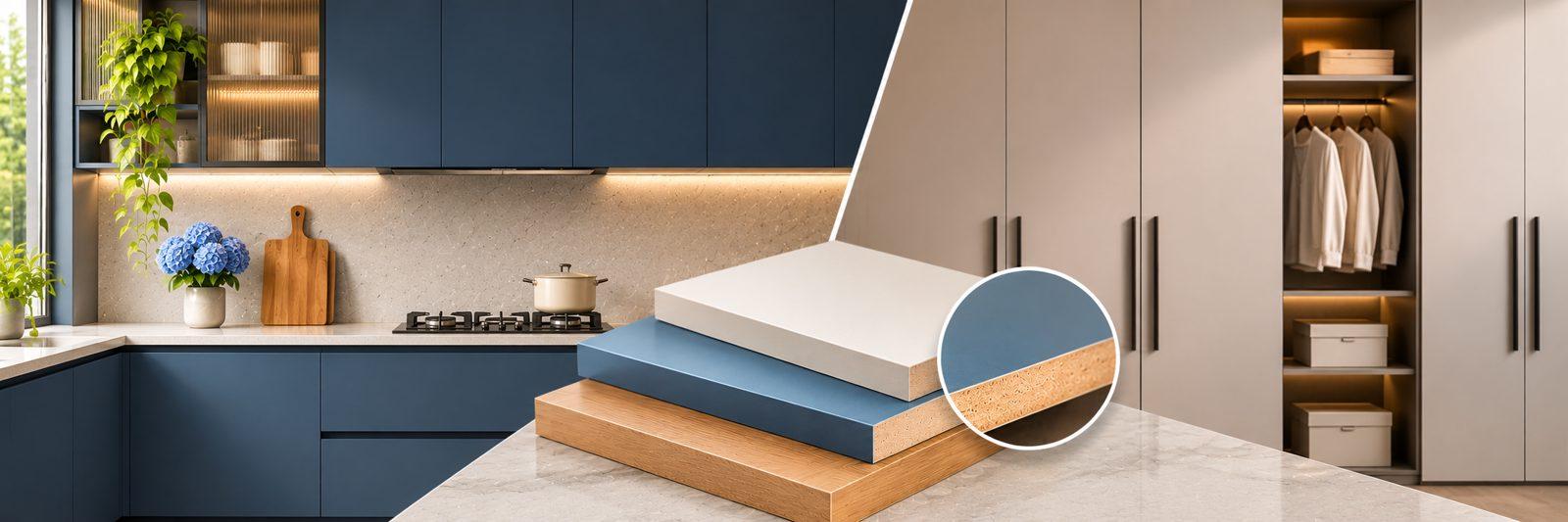
This Kitchen Doesn’t Need a Carpenter – The Rise of Pre-Laminated Boards in 2026
24 Nov 2026 · Kyzo
The way kitchens and wardrobes are manufactured is changing. With modular furniture becoming increasingly popular, designers and manufacturers are looking for materials that offer consistent finishes, efficient fabrication and predictable production timelines. One option gaining attention is pre-laminated boards. Unlike conventional furniture construction, where decorative laminates are applied separately to plywood or other substrates, pre-laminated boards come with a decorative surface already bonded during manufacturing. This makes them an interesting option for modular kitchens, wardrobes and storage furniture, particularly for projects where consistency and production efficiency matter.
For interior designers, carpenters and modular furniture manufacturers in Bangalore, understanding how pre-laminated boards work can help in selecting suitable materials for different applications.
1. What Are Pre-Laminated Boards?
Pre-laminated boards are engineered boards, such as MDF or HDMR, that have a decorative surface bonded to them during the manufacturing process. Instead of purchasing a plain board and applying a decorative laminate separately, manufacturers can work with a board that already has its finished surface.
Depending on the product range, prelam boards are available in different colours, woodgrain patterns, matte finishes and textured designs.
Some common advantages include:
Factory-Applied Finish: The decorative surface is bonded under controlled manufacturing conditions.
Consistent Appearance: Multiple boards from the same product range can offer a more uniform decorative finish.
Reduced On-Site Finishing: Separate decorative laminate pasting may not be required for the pre-finished faces.
Design Variety: Available finishes can include solid colours, woodgrain patterns and textured surfaces.
Production Convenience: They can simplify material preparation for suitable modular furniture applications.
2. Why Are Pre-Laminated Boards Popular in Modular Furniture?
Modular furniture manufacturing involves multiple components that need to be cut, finished and assembled according to specific dimensions. Pre-laminated boards can simplify certain parts of this process because the decorative surface is already applied. Here is why designers and manufacturers consider them:
Reduced Manual Lamination Work: Since the decorative finish is factory-applied, manufacturers do not need to separately laminate the finished faces of every component.
Consistent Decorative Finish: Factory-applied surfaces help maintain a consistent appearance across furniture components, subject to product quality and batch consistency.
Efficient Production Planning: Using ready-finished boards can reduce some finishing steps and help streamline production workflows.
Variety of Design Options: Prelam boards are available in different shades, textures and patterns, allowing designers to explore multiple combinations without separately sourcing every decorative laminate.
Convenient for Repetitive Furniture Components: They can be particularly useful when manufacturing multiple cabinet panels, shelves and storage components with similar finishes.
3. Where Can Pre-Laminated Boards Be Used?
Pre-laminated boards can be considered for several furniture applications, depending on the substrate, surface finish and product specifications.
Wardrobe Interiors
Kitchen Cabinets
TV Units and Shoe Racks
Office Storage and Workstations
Lofts and Modular Storage
4. MDF, HDMR or PVC: Which Prelam Board Should You Choose?
The substrate beneath the decorative surface is just as important as the finish itself. Different board materials have different characteristics, so the right choice depends on the furniture application.
Board Type | General Characteristics | Applications to Consider |
|---|---|---|
Prelam MDF | Smooth, uniform surface suitable for decorative finishes | Wardrobe interiors, shelves and selected storage furniture |
Prelam HDMR | Dense, moisture-resistant board with a uniform structure | Selected modular furniture and cabinet components |
Prelam PVC | PVC-based board with moisture-resistant properties | Suitable furniture applications requiring moisture resistance |
The suitability of each board depends on its density, thickness, load requirements, hardware fixing characteristics and manufacturer specifications.
Remember that HDMR is moisture-resistant, not waterproof. Similarly, the performance of PVC boards depends on their construction and quality.
5. Why Matching Edge Bands Matter
One important detail in pre-laminated furniture is the finishing of exposed edges. When a board is cut into individual components, its internal edges become visible. Using a suitable edge band helps cover these edges and creates a more finished appearance.
Matching PVC edge bands can help achieve a coordinated look across:
Kitchen cabinet shutters and shelves.
Wardrobe panels and storage compartments.
Office cabinets and workstations.
TV units and other modular furniture.
Before ordering, check whether the selected prelam shade has a compatible edge-band option and confirm the required dimensions and thickness.
6. Explore Pre-Laminated Boards on KYZO
For modular furniture manufacturers and interior designers, sourcing the right board and finish combination is an important part of project planning. KYZO brings together interior materials from its private label, Khidki, and other established brands. Through the platform, designers, contractors and furniture manufacturers can explore pre-laminated MDF, HDMR and PVC board options for different furniture applications.
Prelam MDF
See AllWhether you are planning kitchen cabinets, wardrobe interiors or office storage, reviewing board dimensions, finishes and edge-band compatibility can help you make more informed material decisions.
Final Thoughts
Pre-laminated boards offer an alternative to the traditional process of purchasing plain boards and applying decorative laminates separately. Their factory-applied finishes can simplify selected stages of modular furniture manufacturing while providing a range of colours and textures for contemporary interiors.
However, the decorative surface is only one part of the decision. The substrate, thickness, moisture resistance, hardware compatibility and edge finishing all need to be considered before selecting a board.
By understanding these factors, designers and manufacturers can choose pre-laminated boards that suit their furniture requirements and production processes.
FAQs
What are pre-laminated boards?
Pre-laminated boards are MDF, HDMR or other suitable substrates that come with a decorative surface already bonded during manufacturing.
What is the difference between prelam boards and regular laminates?
Regular decorative laminates are applied separately to a suitable substrate, while prelam boards come with the decorative surface already applied.
Do pre-laminated boards require edge banding?
Cut edges may need suitable edge banding to cover the exposed substrate and achieve a finished appearance.
Where can I explore pre-laminated boards?
You can explore Khidki prelam boards and other interior material options through KYZO at kyzo.in.