The Backbone of Modular Furniture: Why Material Choice Matters More Than Ever
27 Nov 2026 · Kyzo
Behind every well-designed modular kitchen, wardrobe or office interior is an important decision: choosing the right materials.
For modular furniture manufacturers and interior contractors, material selection affects more than just the appearance of the finished product. Board consistency, structural properties, surface finish, machining requirements and moisture exposure all influence fabrication, installation and long-term performance.
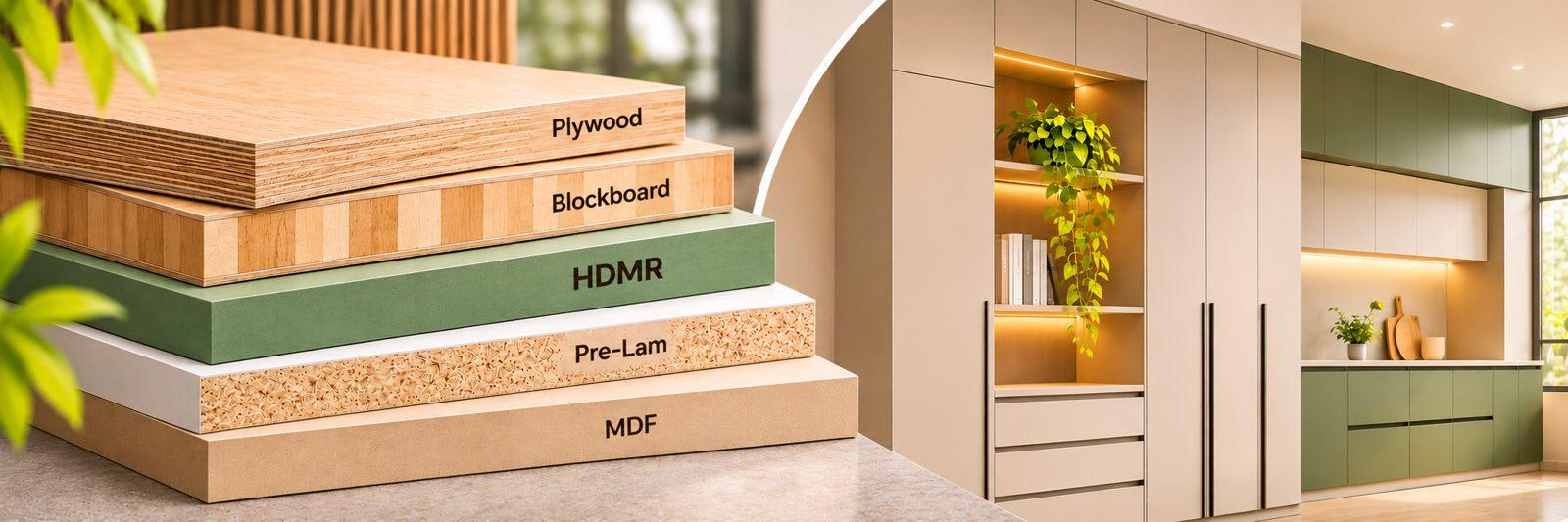
With multiple materials available today, including plywood, blockboard, MDF, HDMR, pre-laminated boards and liner laminates, understanding where each one works best is essential. Whether you're manufacturing furniture in bulk or executing individual interior projects, selecting materials based on their intended application can help improve production efficiency, maintain finishing standards and manage project costs.
Here's a practical guide to the materials commonly used in modular furniture and what to consider when choosing them.
1. Plywood: A Reliable Choice for Furniture Construction
Plywood is widely used in modular furniture because of its layered veneer construction and versatility across different applications. For manufacturers, factors such as thickness consistency, core construction, grade and surface quality are important when selecting plywood.
Common applications:
Kitchen cabinets and carcasses.
Wardrobe panels and shelves.
TV units and storage furniture.
Furniture requiring suitable screw-fixing properties.
What to look for:
Appropriate MR, BWR or BWP grade for the application.
Consistent thickness and surface quality.
Suitable core construction.
Compatibility with laminates and edge finishing.
2. Blockboard: For Large Panels, Shutters and Doors
Blockboard has a different core construction from plywood. It consists of solid wood strips or battens arranged side by side and bonded between veneer layers. This construction makes blockboard useful for certain long-panel furniture applications.
Common applications:
Large wardrobe shutters.
Loft shutters.
Flush doors.
Partitions and furniture panels.
Selected long furniture components.
What to look for:
Quality and consistency of the wood-strip core.
Appropriate MR or BWP grade.
Uniform thickness.
Suitable support and hardware arrangements for large shutters.
3. MDF and HDMR: For Smooth Finishes and CNC Applications
MDF is an engineered wood board made from wood fibres bonded using resin under heat and pressure. Its relatively uniform composition and smooth surface make it useful for decorative furniture applications. HDMR is designed to offer higher density and improved moisture resistance compared with standard MDF, depending on the product specifications.
Common applications:
CNC-cut decorative panels.
Fluted shutters and wall panels.
Painted furniture components.
Wardrobe shutters.
Office desks and storage units.
Choosing between MDF and HDMR:
Standard MDF can be considered for dry interior applications requiring smooth surfaces and decorative machining.
HDMR can be considered where improved moisture resistance and a denser board structure are required.
Neither should automatically be treated as waterproof or suitable for prolonged water exposure.
4. Pre-Laminated Boards: Simplifying Furniture Production
Pre-laminated boards come with a decorative surface applied during manufacturing, reducing the need for separate face-lamination work during furniture production. They are particularly useful for manufacturers handling repetitive furniture components and standardised modular units.
Common applications:
Wardrobe carcasses.
Kitchen cabinet interiors.
Internal shelves.
Drawer components.
Office storage furniture.
Key advantages:
Reduces separate laminate application steps.
Provides a ready-finished decorative surface.
Helps maintain consistent finishes across panels.
Simplifies material planning for repetitive production.
Cutting, edge banding, drilling and assembly are still required, but pre-laminated boards can simplify the finishing workflow.
5. Liner Laminates: Finishing the Inside of Furniture
While decorative laminates are generally selected for visible exterior surfaces, liner laminates are designed for internal furniture applications. They provide a more uniform decorative finish to wardrobe interiors, kitchen cabinets, drawers and shelves.
Common applications:
Wardrobe carcasses.
Kitchen cabinet interiors.
Drawer surfaces.
Internal shelves and storage compartments.
Why they matter:
Cover unfinished board surfaces.
Create a consistent interior appearance.
Provide a finished surface that can be wiped and maintained according to product instructions.
Help coordinate internal finishes with external furniture designs.
6. Smart Material Selection Can Improve Procurement Efficiency
Material selection is only one part of successful modular furniture production. How efficiently those materials are sourced, stored and managed also matters. For factories and contractors handling multiple projects, sourcing different material categories through a consolidated procurement process can help simplify operations. Consider the following:
Standardise specifications: Use consistent board thicknesses, grades and finishes wherever the design allows.
Plan material requirements: Estimate quantities before production to reduce leftover stock and unnecessary purchases.
Match materials to applications: Avoid using premium-grade materials where they are not required, or unsuitable boards where additional performance is needed.
Coordinate deliveries: Plan procurement around production schedules to reduce material-related interruptions.
Check availability: Confirm stock before committing to project timelines.
KYZO brings together plywood, blockboards, MDF, HDMR, pre-laminated boards, laminates and hardware from Khidki and other established brands. For orders in Bangalore, KYZO also offers four-hour delivery, subject to stock availability and applicable delivery conditions.
7. How to Choose the Right Material for Your Modular Furniture Project
Furniture application | Materials to consider |
|---|---|
Kitchen cabinets | Suitable-grade plywood, MDF or PVC boards |
Large wardrobe shutters | Plywood or blockboard |
CNC decorative panels | MDF or suitable HDMR |
Wardrobe carcasses | Plywood, MDF or pre-laminated boards |
Internal cabinet finishes | Liner laminates |
Office furniture | Plywood, MDF or pre-laminated boards |
Flush doors | Suitable-grade blockboard or door-core material |
The final selection should depend on panel dimensions, load requirements, moisture exposure, hardware compatibility, finish requirements and product specifications.
Conclusion
The success of modular furniture depends on more than design and workmanship. Choosing the right material for each component plays an equally important role in fabrication, finishing, installation and long-term performance. Plywood, blockboard, MDF, HDMR, pre-laminated boards and liner laminates each serve different purposes. Understanding their properties helps manufacturers and contractors make more informed decisions instead of relying on a single material for every application.
Explore interior materials from Khidki and other established brands on KYZO to plan your next modular furniture project with the right combination of boards, finishes and hardware.
FAQs
Which material is best for modular furniture?
There is no single material that works best for every application. Plywood is widely used for furniture construction, blockboard for selected large panels and doors, MDF for decorative machining, and pre-laminated boards for ready-finished furniture components.
Is MDF suitable for modular kitchen furniture?
MDF can be used for selected kitchen furniture components, depending on its grade, moisture exposure and finishing. Areas exposed to water require suitable moisture-resistant materials and proper edge protection.
What are pre-laminated boards used for?
Pre-laminated boards are commonly used for wardrobe carcasses, kitchen cabinet interiors, shelves, drawers and office storage. Their factory-applied decorative surface reduces the need for separate face-lamination work.
Why are liner laminates used inside wardrobes and kitchen cabinets?
Liner laminates provide a finished decorative surface to internal furniture components such as shelves, drawers and cabinet interiors. They help create a more uniform appearance and make surfaces easier to maintain.
Where can I source plywood, MDF, blockboards and laminates in Bangalore?
You can explore different interior material categories on KYZO, including Khidki plywood, blockboards, MDF, HDMR, pre-laminated boards and Kanvas Liner Laminates, along with products from other established brands.