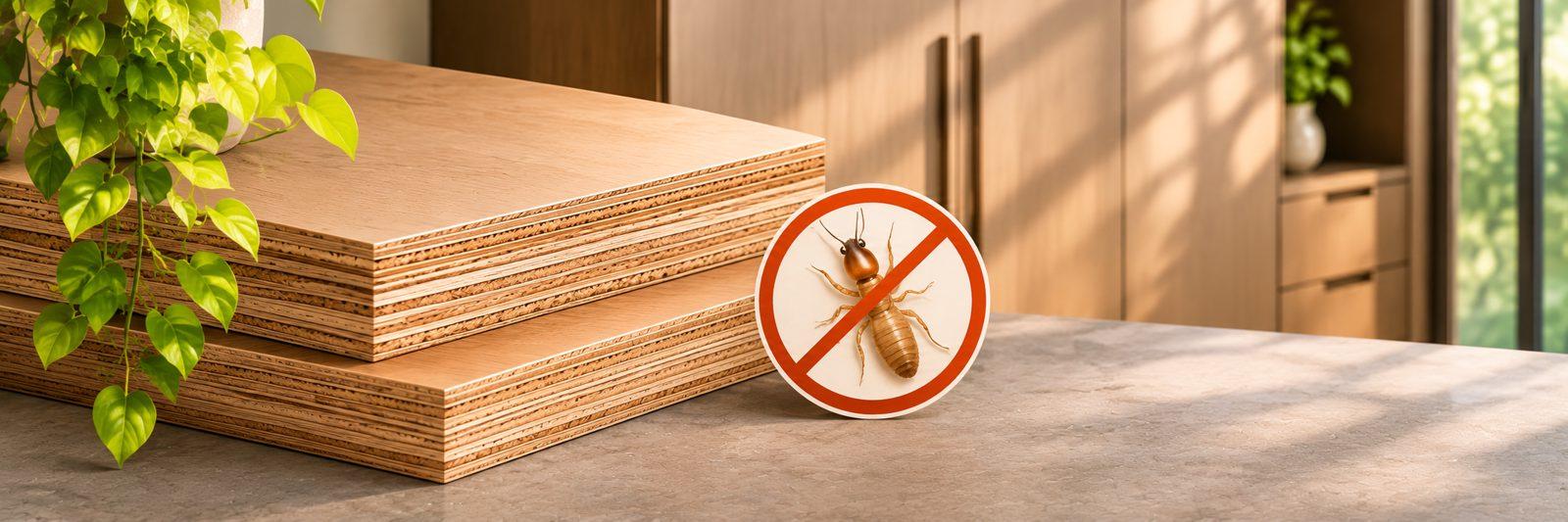
Know Your Materials
Termite-Proof or Just Treated? What Contractors Must Know Before Selecting Plywood in 2026
24 Nov 2026 · Kyzo
Termite damage is a concern for homeowners, interior designers and contractors, particularly when planning long-lasting furniture and storage solutions. Although termites are often associated with older buildings or rural properties, urban homes can also face termite problems. In growing residential areas, protecting furniture against termite damage is an important consideration during material selection.
However, not every plywood product marketed as termite-resistant offers the same level of protection. Understanding the treatment process, plywood grade and product specifications can help designers and buyers make more informed decisions.
1. Why Is Termite Protection Important in Furniture?
Termites feed on cellulose-based materials, including wood and wood-based products. When they reach furniture or concealed wooden structures, damage may remain unnoticed until it becomes significant. Common areas of concern include:
Wardrobes: Wooden furniture and concealed panels can be vulnerable to termite activity.
Kitchen Cabinets: Plywood used in kitchen furniture should be selected with both moisture exposure and termite protection in mind.
Storage Units: Cabinets, shelves and other wooden furniture can be affected if termite activity is present.
Wooden Fixtures: Door frames, furniture components and other wood-based installations may also require protection.
Termite protection should be considered alongside proper building-level pest management, since treated plywood alone cannot prevent termites from entering a property.
2. Common Misconceptions About Termite-Resistant Plywood
The term “termite-resistant” is frequently used in the plywood market, but buyers should understand what the claim actually means.
Surface Spraying Is Not the Same as Manufacturing Treatment: Applying chemicals to the surface of a finished board is different from using a specified treatment process during manufacturing. Ask the manufacturer what treatment is used and which components are covered.
BWP Does Not Automatically Mean Termite-Proof: BWP plywood is associated with higher moisture-resistant bonding performance. Its grade alone does not establish termite resistance.
ISI Certification Does Not Automatically Guarantee Termite Protection: IS 710 and IS 303 relate to plywood product standards. They should not be treated as standalone termite-resistance certifications. Any termite-treatment claim should be supported by separate product documentation.
Neem Face Does Not Guarantee Complete Protection: Neem is traditionally associated with insect-repellent properties, but a neem face veneer alone should not be considered proof that the entire plywood sheet is termite-proof.
3. How to Evaluate Termite-Resistant Plywood
Before purchasing plywood for wardrobes, kitchens or other furniture applications, consider these checks:
Treatment Process: Ask whether termite treatment is incorporated during manufacturing and which layers or components are treated.
Treatment Documentation: Request technical details or test reports supporting the manufacturer's termite-resistance claims.
Plywood Grade: Check whether the product is MR, BWR or BWP according to its intended application.
ISI Marking: Verify applicable certification and manufacturer licence details where an ISI claim is made.
Warranty Conditions: Review what the warranty actually covers, including any exclusions related to termites, moisture and installation.
Installation Conditions: Ensure that furniture and building components are installed appropriately and that the property has suitable pest-management measures.
These checks help distinguish documented product performance from general marketing claims.
4. KYZO Plywood Options to Explore
Different furniture applications require different plywood grades and construction characteristics. KYZO offers plywood options that can be evaluated according to the requirements of a project. When comparing these products, remember that moisture resistance, termite protection and structural performance are separate considerations.
Plywood Collection
See AllFinal Thoughts
Termite protection is an important consideration when selecting plywood for furniture and interior projects. However, terms such as BWP, ISI certified and neem face should not automatically be interpreted as guarantees of termite resistance. The better approach is to check the actual treatment process, request supporting documentation and understand the product warranty before purchasing.
By combining suitable material selection with proper installation and building-level pest management, designers and homeowners can make more informed decisions when planning long-lasting interiors.
FAQs
Is neem face plywood completely termite-proof?
A neem face veneer alone does not establish complete termite protection. Check the manufacturer's treatment process and supporting documentation.
How can I check whether plywood has been treated against termites?
Ask the manufacturer for treatment details, technical documentation, test reports and warranty conditions supporting the claim.
Can termite-resistant plywood prevent a building-wide termite problem?
No. Treated plywood cannot replace building-level pest management. If termites are present in the property, consult a qualified pest-control professional.