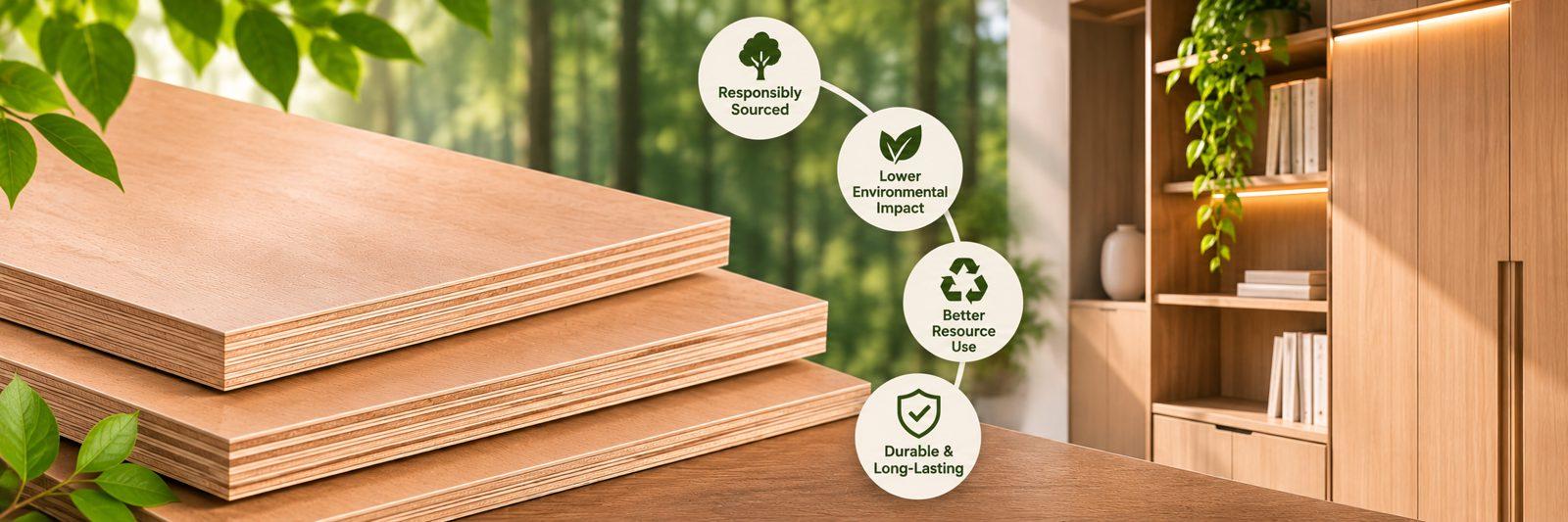
Navigating Sustainable Plywood Options: Eco-Friendly Choices for Conscious Consumers
27 Nov 2026 · Kyzo
As sustainability becomes an increasingly important part of construction and interior design, the materials used in furniture and home interiors deserve closer attention. Plywood is widely used in wardrobes, modular kitchens, cabinets and furniture, making it important to understand where it comes from and how responsibly it is manufactured. Choosing sustainable plywood is not simply about selecting a board labelled as eco-friendly. It involves looking at the source of the wood, manufacturing practices, certifications, material efficiency and the product's expected lifespan.
What Makes Plywood Sustainable?
Plywood is manufactured by bonding multiple layers of wood veneer together to create a strong and versatile board. Its sustainability depends on several factors throughout the manufacturing process.
Some important considerations include:
Responsible sourcing: Wood sourced from responsibly managed forests helps support sustainable forestry practices.
Efficient manufacturing: Processes that minimise material waste, energy consumption and resource use can reduce environmental impact.
Responsible adhesives: Adhesive selection and formaldehyde emissions are important considerations when evaluating engineered wood products.
Product lifespan: Durable materials that remain suitable for their intended application over time may reduce the need for frequent replacement.
Waste management: Reusing wood residues and improving material utilisation can help reduce manufacturing waste.
Understanding these factors makes it easier to evaluate sustainability claims rather than relying only on product labels.
Benefits of Choosing More Sustainable Wood-Based Materials
Selecting responsibly sourced and appropriately manufactured materials can offer benefits beyond the immediate furniture project.
1. Supports Responsible Resource Management
Choosing products with credible sourcing information can encourage responsible forestry and better resource management throughout the supply chain.
2. Reduces Material Waste
Materials that utilise recycled wood, agricultural residues or more efficient manufacturing processes can contribute to better resource utilisation.
3. Encourages Better Manufacturing Practices
Demand for responsibly manufactured products can encourage suppliers and manufacturers to improve sourcing transparency, waste management and production processes.
4. Supports Long-Term Material Planning
Selecting boards suited to their intended applications can help reduce premature replacement and unnecessary material consumption.
5. Improves Awareness of Indoor Material Quality
Adhesives and emissions are important considerations when selecting engineered wood products for indoor environments. Checking relevant emission certifications and technical documentation can help buyers make more informed choices.
What Should You Check Before Buying Sustainable Plywood?
If you are a designer, architect, contractor or homeowner sourcing plywood for an interior project, consider these checks before purchasing:
1. Verify the sourcing claims: Look for recognised certifications and documentation instead of relying only on descriptions such as eco-friendly or green plywood.
2. Check adhesive and emission information: Ask about formaldehyde emissions and relevant product certifications, particularly for furniture used in enclosed indoor spaces.
3. Understand the plywood grade: Choose MR, BWR or BWP plywood based on the moisture exposure and application. Sustainability does not replace the need to select the correct technical grade.
4. Evaluate durability and intended use: Check the board's core construction, bonding, thickness and product specifications to ensure it is suitable for the project.
5. Compare manufacturers and product documentation: Look for transparent product information, manufacturing details, certifications and warranty conditions.
6. Plan material usage efficiently: Accurate measurements, cutting plans and appropriate storage can help reduce avoidable wastage during furniture fabrication and installation.
Conclusion
Sustainable material selection is becoming an important consideration in modern construction and interior design. From responsibly sourced plywood to bamboo boards, agricultural-fibre alternatives and reclaimed wood products, buyers have several approaches to explore.
However, no single material is automatically the most sustainable choice for every project. Responsible sourcing, manufacturing practices, adhesive emissions, durability and application suitability all play a role.
For designers, architects, contractors and furniture manufacturers, making informed material choices starts with understanding product specifications and verifying sustainability claims.
Plywood Collection
See AllFAQs
What is sustainable plywood?
Sustainable plywood generally refers to plywood manufactured using responsibly sourced wood and production practices that consider resource efficiency, waste reduction and environmental impact.
Is bamboo plywood more sustainable than regular plywood?
Bamboo is a rapidly renewable resource, but the overall sustainability of bamboo boards depends on cultivation, processing, adhesives, transportation and manufacturing practices.
Where can I buy plywood and sustainable interior materials in Bangalore?
You can explore plywood, MDF, blockboards and other interior materials from Khidki and established brands on KYZO at kyzo.in.