Product Spotlight
KYZO PVC/WPC Boards: Lightweight, Durable, and Ideal for Modern Interiors
4 Nov 2026 · Kyzo
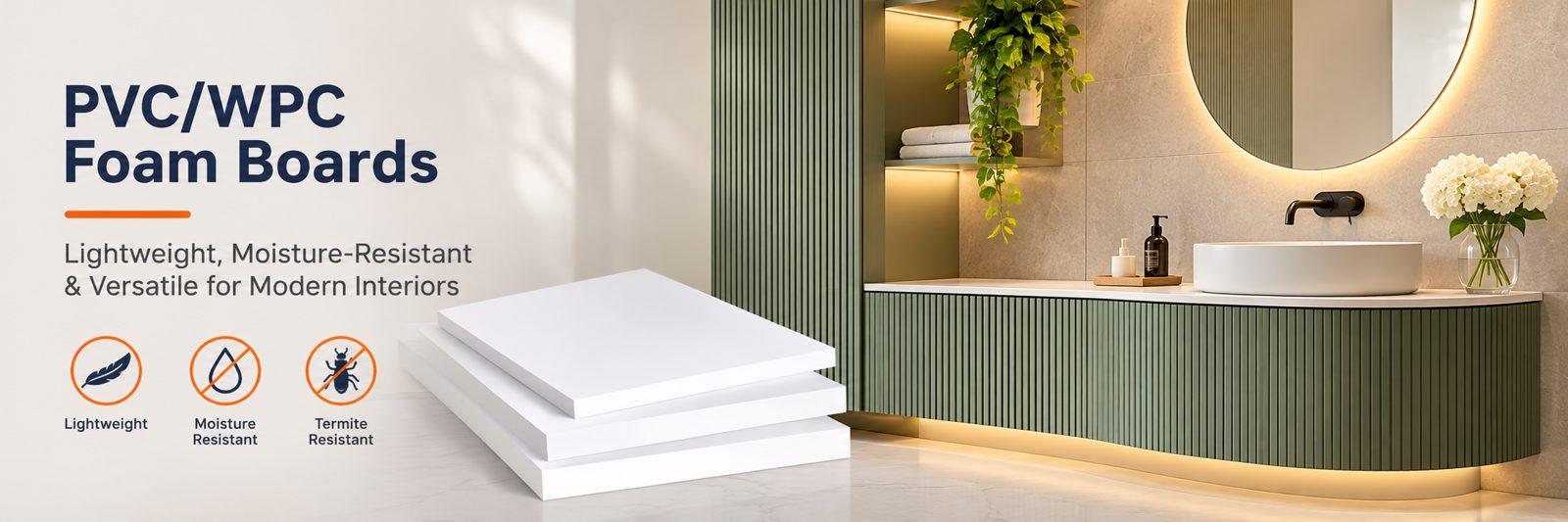
When furniture design pushes the boundaries of shape, scale, and environment, traditional boards sometimes struggle. Enter PVC/WPC foam boards — engineered materials that offer lightweight structure, smooth surfaces, and excellent dimensional stability.
Whether you’re designing curved wardrobes, utility washrooms, or commercial partitions, PVC/WPC boards open up new possibilities and with KYZO’s range, you get both performance and peace of mind.
1. What Are PVC/WPC Foam Boards?

PVC (Polyvinyl Chloride) foam boards and their WPC (Wood-Plastic Composite) equivalents are lightweight structural boards made by combining high-density foam cores with plastic and wood fibres or coatings. These boards are then surface-finished to provide a smooth, paintable or laminate-ready exterior.
KYZO currently offers:
PVC WPC Board
See All
2. Why Designers Are Turning to PVC/WPC Boards
These boards offer unique advantages in modern interiors:
Lightweight but rigid: Ideal for large panels, wall cladding, or suspended furniture where weight is a concern.
Smooth core and surface: Great for laminates, veneers, paint, or wrapped finishes without core texture showing through.
Moisture and termite resistant: Perfect for utility areas, washrooms, exterior facades, or places where standard board might warp.
Easy to machine: Cuts, routes, curves and edge-bands cleanly.
Durable in humid conditions: Less prone to swelling compared to MDF or standard plywood.
3. Ideal Applications for KYZO PVC/WPC Boards
Curved wardrobe or TV walls: The lightweight core makes enabling curved furniture more feasible.
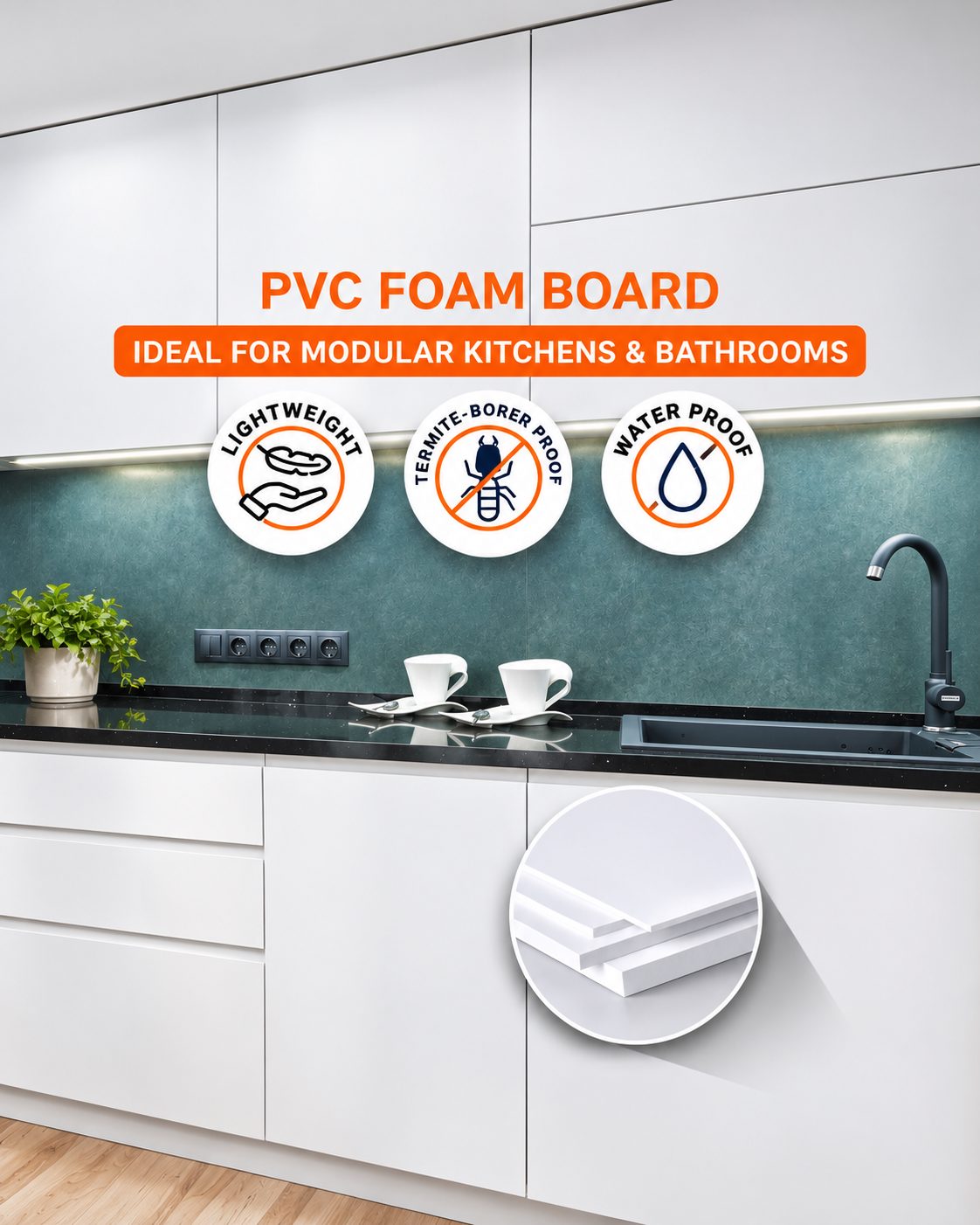
Kitchen backsplashes & utility panels: Moisture-resistance makes these boards suitable near sinks or wet zones.
Commercial partitions & signage boards: Large format 8′×4′ size allows faster installation.
Washroom cabinets & vanity panels: Water-resistant core prevents signature swelling issues.
Exterior-facing panels or balconies: When paired with weather-resistant finishes, offers long-term stability.
4. Choosing Between the Two Densities
Product | Density | Best Use |
|---|---|---|
0.50 density imported | Lighter, more flexible | Curved shapes, partitions, wall cladding |
0.55 high-density | Heavier, higher compressive strength | Kitchen/utility cabinets, heavy use zones |
If your project involves large, heavy duty furniture in humid zones, go for the 0.55 HD version. For lightweight, curved or suspended panels, the 0.50 version gives easier handling.
5. Tips for Working with PVC/WPC Boards
Use fine-toothed blades when cutting to avoid tearing.
For laminating or painting, ensure board is clean and dust-free.
When edge-banding, use adhesives compatible with plastic cores.
For humid zones, couple the board with a water-resistant surface like laminate or acrylic.
Always seal all exposed edges to prevent moisture ingress.
6. Sustainability & Long-Term Value
Because PVC/WPC boards often replace heavier wood-based materials, they reduce structural load and can offer longer lifecycle in demanding environments. Their termite and moisture resistance help minimize maintenance and replacements - which means lower lifetime cost for the client and fewer service issues for contractors.
Final Word
If you’re designing interiors today - be it residential, commercial or hospitality - materials that combine design freedom and durability stand out. KYZO’s PVC/WPC boards bring that combination together: lightweight, machine-friendly, moisture-resistant and ready for premium finishes.
FAQs
What are PVC and WPC foam boards?
PVC foam boards are lightweight boards made from foamed polyvinyl chloride. WPC boards combine wood fibres and plastic to create an engineered board. Both offer smooth surfaces and moisture-resistant properties.
What are the main benefits of PVC/WPC foam boards?
They are lightweight, moisture-resistant, termite-resistant, easy to machine and suitable for various surface finishes, including laminates, veneers and paint.
hat should I consider when installing PVC/WPC boards?
Use suitable cutting blades, compatible adhesives and appropriate edge-finishing methods. Seal exposed edges and follow the manufacturer's installation guidelines for the best results.
Why choose KYZO for PVC/WPC boards?
KYZO offers PVC/WPC board solutions for different interior requirements, helping designers, contractors and modular furniture manufacturers source materials suited to their project's application and performance needs.