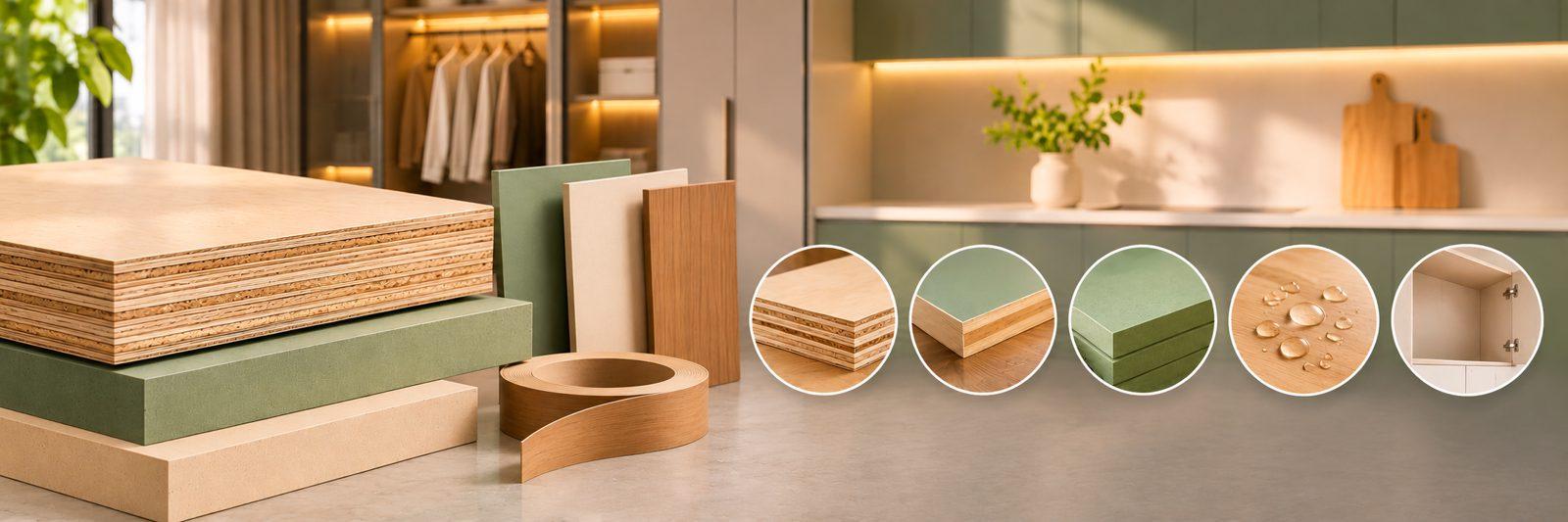
Interior Red Flags – 5 Mistakes Designers Are Now Avoiding in 2026
24 Nov 2026 · Kyzo
A well-designed interior is about more than colours, finishes and furniture layouts. The materials used behind the finished surfaces play an equally important role in determining how the furniture looks, performs and lasts over time. For interior designers, architects and contractors, choosing the wrong plywood, MDF board or laminate can create problems that become visible only during fabrication or after installation. Uneven panels, poorly finished edges, unsuitable board density and neglected cabinet interiors can all affect the final result.
Here are five common material-selection mistakes designers should watch out for when planning kitchens, wardrobes and modular furniture.
1. Using Non-Calibrated Plywood for Precision Furniture
Why it matters:
Thickness consistency is important when manufacturing modular furniture. Variations between plywood sheets can create challenges during CNC cutting, assembly, alignment and edge finishing. This can become particularly noticeable in factory-made kitchens, wardrobes and furniture components that require precise dimensions.
What to consider instead:
Calibrated plywood is processed to achieve more uniform thickness, making it useful for furniture applications that require dimensional consistency.
KYZO offers calibrated plywood options in different grades and thicknesses, including products for suitable kitchen and interior furniture applications.
Before purchasing, check the actual thickness, calibration specifications and product grade.
2. Ignoring Edge Band and Laminate Coordination
Why it matters:
The edges of furniture are just as visible as its main surfaces. A laminate may look well-finished, but a poorly matched or incorrectly applied edge band can affect the overall appearance.
What to consider instead:
Plan the edge finish alongside the laminate selection rather than treating it as a separate decision.
Consider:
Matching or complementary edge-band colours.
Appropriate edge-band thickness.
Compatibility with the selected board and laminate.
Consistent application and finishing.
3. Overlooking Board Density and Screw-Holding Requirements
Why it matters:
The density and construction of MDF and HDMR boards can influence their machining characteristics, edge quality and ability to hold screws and hardware. Selecting a board without considering its intended application can create problems when installing hinges, drawer channels, shelves and other furniture components.
What to consider instead:
Evaluate the board's density, thickness, screw-holding characteristics and manufacturer specifications before selecting it. Rather than relying on density alone, check whether the board is appropriate for the intended furniture component and hardware requirements.
4. Choosing the Wrong Plywood Grade for Moisture-Prone Areas
Why it matters:
Kitchen cabinets, under-sink storage and utility furniture can experience moisture exposure. Selecting a plywood grade without considering these conditions may affect the long-term performance of the furniture.
What to consider instead:
Choose the plywood grade according to the location and expected moisture exposure.
MR Plywood: Generally suitable for interior furniture in relatively dry conditions.
BWR Plywood: Offers greater moisture resistance than MR plywood.
BWP Plywood: Can be considered for applications requiring higher resistance to moisture exposure.
Remember that even BWP plywood does not make an entire cabinet waterproof. Edge sealing, surface finishing and installation quality remain important.
5. Neglecting the Interior Finish of Wardrobes and Cabinets
Why it matters:
The exterior of a wardrobe often receives most of the design attention, while the interior is left with a basic board finish. However, cabinet interiors are used every day. Rough surfaces, visible adhesive marks and poorly coordinated finishes can make an otherwise well-designed wardrobe feel incomplete.
What to consider instead:
Liner laminates provide decorative surface options for wardrobe and cabinet interiors. These finishes can help create a more coordinated appearance across the inside and outside of furniture. Before selecting a liner laminate, check its thickness, surface properties, application suitability and maintenance instructions.
6. A Material Selection Checklist Before Starting Your Next Project
Before finalising materials for a kitchen, wardrobe or modular furniture project, consider these checks:
Plywood: Verify grade, thickness, construction and calibration.
Plywood Collection
See AllMDF/HDMR: Check density, thickness and suitability for the intended application.
MDF & HDMR Boards
See AllLaminates: Compare colours, textures and surface finishes.
All Laminates
See AllEdge Bands: Confirm colour coordination and availability.
Edge Bands
See AllHardware: Ensure the selected board is suitable for the required hinges, channels and fittings.
Hardware Collection
See AllLiner Finishes: Include cabinet interiors in the material plan.
Liner Laminates
See AllSamples: Review physical samples before placing bulk orders.
These checks can help identify potential material mismatches early and make the fabrication process more predictable.
7. Explore Interior Materials on KYZO
Good material selection starts with understanding the requirements of each furniture component.
KYZO brings together interior materials from its private label, Khidki, and other established brands. Designers, architects, contractors and furniture manufacturers can explore calibrated plywood, MDF/HDMR boards, decorative laminates and liner laminates for different applications. Whether you are planning a modular kitchen, a complete wardrobe or customised furniture, comparing product specifications and finishes can help you make more informed decisions.
Final Thoughts
Good interior design is not just about selecting attractive finishes. It also involves choosing materials that support the furniture's construction, intended use and everyday requirements. From calibrated plywood and suitable board density to coordinated edge bands and finished cabinet interiors, small material decisions can have a significant impact on the final result.
By identifying these five common mistakes early, designers can reduce avoidable fabrication challenges and deliver more consistent furniture projects.
FAQs
Why is calibrated plywood preferred for modular furniture?
Calibrated plywood offers more uniform thickness, which can help with dimensional consistency during cutting, assembly and finishing.
Does plywood calibration guarantee CNC precision?
No. Calibration helps improve thickness consistency, but CNC results also depend on board quality, machine settings, cutting tools and fabrication methods.
Why should edge bands match the laminate?
Coordinated edge bands create a more consistent appearance and help achieve a cleaner finish along exposed furniture edges.
Where can designers explore plywood, boards and laminates?
Designers can explore Khidki products and options from other established brands through KYZO's at kyzo.in.