Product Spotlight
Inside Laminates for Inside Work: Why Liner Laminates Matter More Than You Think
26 Nov 2026 · Kyzo
When planning a wardrobe, modular kitchen or storage unit, most of the attention goes towards the exterior. Designers spend time selecting shutter colours, decorative laminates, textures and finishes. But what about the surfaces inside the furniture? The interiors of wardrobes, kitchen cabinets, drawers and storage units are used every day. Leaving these surfaces unfinished or using basic coatings can affect the overall appearance and maintenance of the furniture.
This is where liner laminates come in.
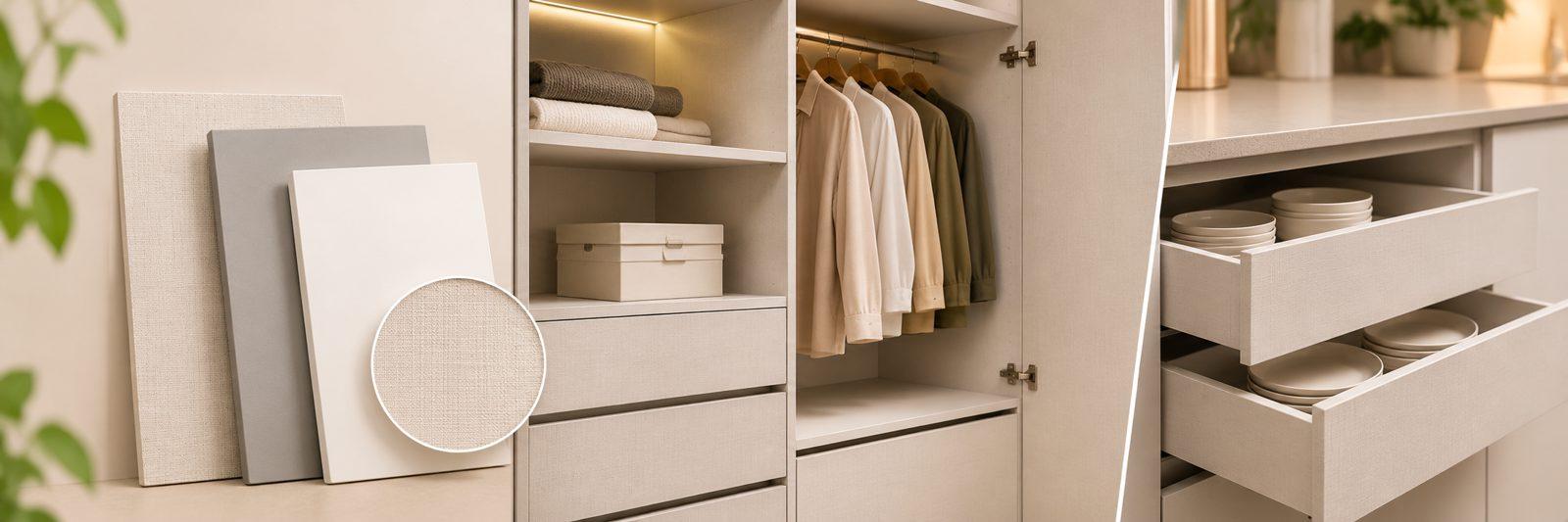
Liner laminates are designed for internal furniture surfaces, providing a consistent finish across cabinet interiors, shelves, drawers and wardrobe carcasses. They help cover exposed board surfaces and create a cleaner, more coordinated appearance.
For modular furniture manufacturers, interior designers and contractors, choosing the right liner laminate is an important part of creating furniture that looks finished both inside and out.
Let's explore why liner laminates matter and what to consider when selecting them.
1. Creates a Clean and Uniform Interior Finish
Raw plywood and MDF surfaces may have visible grains, colour variations or an unfinished appearance. Applying liner laminates gives these surfaces a more consistent finish. They are commonly used in:
Wardrobe interiors and lofts.
Kitchen cabinet interiors.
Drawer bases and internal shelves.
Crockery and storage units.
Office cabinets.
Neutral shades such as white, grey and cream are popular choices because they create a clean appearance and complement different exterior finishes.
2. Makes Internal Surfaces Easier to Maintain
Furniture interiors are exposed to everyday dust, stains and handling. Unfinished board surfaces can be more difficult to wipe and maintain. A properly applied liner laminate provides a finished surface that can generally be cleaned with a soft cloth, following the manufacturer's care instructions.
This is particularly useful for kitchen cabinets, wardrobe shelves and frequently used storage spaces.
However, liner laminates should not be treated as waterproofing solutions. Proper board selection, edge sealing and installation remain important, especially in moisture-prone areas.
3. Reduces the Need for Separate Decorative Finishing
Without liner laminates, internal furniture surfaces may require additional finishing treatments depending on the board and the desired appearance. Using a pre-finished liner laminate provides a ready decorative surface once it has been correctly bonded to the substrate. For modular furniture manufacturers handling multiple units, this can help standardise the appearance of internal surfaces and simplify finishing decisions.
4. Complements Modern Wardrobe and Kitchen Designs
Modern interiors increasingly focus on the details inside furniture, not just what is visible from the outside. A coordinated interior finish can make a wardrobe or kitchen feel more thoughtfully designed. For example:
White liners: Create a bright, clean appearance inside wardrobes and cabinets.
Grey liners: Offer a subtle contemporary finish.
Fabric-textured liners: Add visual texture to wardrobe interiors.
Wood-inspired liners: Complement natural and woodgrain exterior finishes.
Choosing the right liner shade alongside the external laminate can create a more cohesive furniture design.
5. Supports Consistent Finishing in Modular Furniture Production
For furniture factories and OEMs, maintaining consistency across multiple units is important. Using standardised liner laminate shades and specifications helps create a uniform appearance across wardrobes, kitchen cabinets and storage systems. Before selecting a liner laminate, manufacturers should consider its thickness, sheet dimensions, surface finish, compatibility with the substrate and bonding requirements.
6. Where Can You Use Liner Laminates?
Liner laminates are commonly used across several interior furniture applications:
Wardrobe interiors and loft storage.
Kitchen cabinet interiors and shelves.
Drawer interiors and storage compartments.
Crockery and display units.
Office storage cabinets.
Internal surfaces of modular furniture.
For bathroom vanities, their suitability depends on the moisture exposure, substrate and installation details. They should not be used as a substitute for appropriate moisture-resistant materials and sealing.
Final Word
A well-designed wardrobe or kitchen should look finished from the inside as well as the outside. While external laminates define the overall style, liner laminates help create cleaner, more coordinated internal surfaces. From wardrobes and kitchen cabinets to drawers and office storage, choosing the right liner laminate can improve the appearance and maintainability of everyday furniture.
Liner Laminates
See AllFAQs
What are liner laminates used for?
Liner laminates are primarily used to finish the internal surfaces of wardrobes, kitchen cabinets, drawers, shelves and other storage units. They cover exposed board surfaces and provide a neat, uniform appearance.
What is the difference between decorative laminates and liner laminates?
Decorative laminates are generally selected for visible exterior surfaces such as wardrobe shutters, kitchen cabinets and tabletops. Liner laminates are primarily designed for internal surfaces where a clean, functional finish is required.
Are liner laminates easy to clean and maintain?
Generally, yes. Their finished surfaces can be wiped with a soft cloth to remove everyday dust and light stains. Follow the manufacturer's cleaning instructions and avoid harsh abrasive cleaners.
Does KYZO offer fast delivery for liner laminates in Bangalore?
Yes, KYZO offers four-hour delivery for eligible orders in Bangalore.