From Factory to Site – What Designers Should Know About Material Wastage, Warping & Core Gaps in 2026
25 Nov 2026 · Kyzo
In modular furniture manufacturing, small material inconsistencies can create surprisingly large problems. Uneven board thickness, internal core gaps and warped plywood sheets can affect everything from CNC cutting and edge finishing to furniture assembly and installation.
For interior designers, architects, contractors and modular furniture manufacturers, these issues are not just about material quality. They can also influence production time, labour costs and the amount of usable material available for a project.
As precision-based furniture manufacturing becomes more common, choosing plywood and boards based on their construction and specifications is becoming increasingly important. Here are 4 material-related issues that can contribute to avoidable wastage and how to evaluate them before starting fabrication.
1. Core Gaps: The Hidden Cause of Fabrication Problems
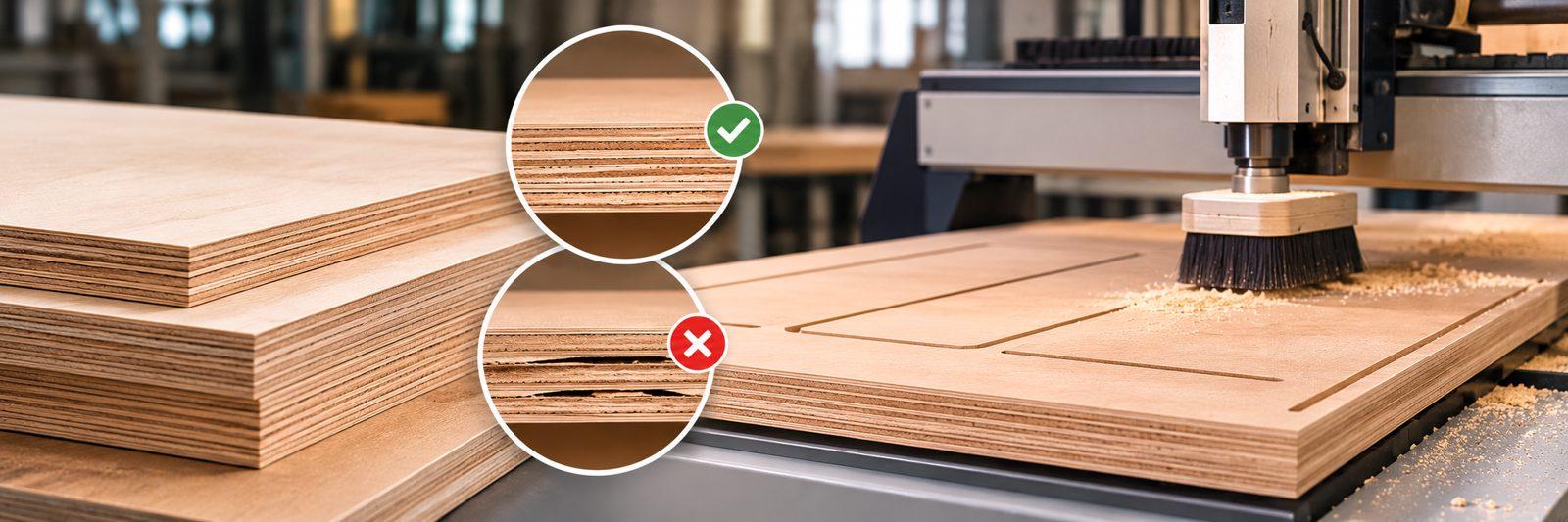
Plywood is manufactured by bonding multiple layers of wood veneer together. Gaps or voids within these layers can affect the consistency of the internal construction. Although these defects may not be visible on the finished surface, they can become noticeable during machining and fabrication. Potential problems include:
Chipping During CNC Cutting: Internal voids can contribute to uneven edges when cutting through affected sections.
Edge Finishing Challenges: Gaps near exposed edges may require additional preparation before edge banding.
Hardware Fixing Issues: Internal voids can affect screw fixing in certain locations.
Material Rework: Damaged or unsuitable sections may need additional inspection or replacement.
For manufacturers working with precision furniture components, inspecting the exposed edges and checking the manufacturer's core-construction specifications can help identify potential issues.
2. Warping: Why Plywood Flatness Matters
Warping occurs when a plywood sheet bends or loses its flat shape. It can make handling, cutting and assembly more difficult, particularly when manufacturing large furniture panels. A warped sheet may create challenges such as:
Difficulty positioning the sheet accurately during cutting.
Alignment issues during furniture assembly.
Uneven surfaces in finished components.
Additional effort during installation.
When selecting plywood, inspect sheets for visible bending, surface irregularities and handling damage.
Proper storage and transportation also matter. Plywood should be stored on a flat, supported surface and protected from unsuitable moisture conditions.
3. Calibration: Improving Thickness Consistency
Calibration is a machining process used to bring plywood or boards to a more uniform thickness. For modular furniture manufacturers, consistent thickness can help simplify fabrication activities that depend on accurate dimensions. Some potential benefits include:
Consistent Component Dimensions: Uniform thickness helps manufacturers work with specified measurements across furniture components.
More Predictable Edge Finishing: Consistent board dimensions can make it easier to plan edge banding and finishing processes.
Fabrication Planning: Calibrated sheets can be useful when manufacturing components that need to fit together accurately.
Assembly Consistency: More uniform thickness can help reduce variations between adjoining furniture components.
However, calibration does not automatically guarantee that a sheet is flat, free from warping or free from internal core gaps. These quality factors should be evaluated separately.
4. CNC Cutting and Material Utilisation: Why Every Sheet Matters
CNC routers and panel saws are widely used in modern furniture manufacturing. The quality and consistency of the board being processed can influence cutting accuracy and material utilisation.
Poor-quality or unsuitable sheets may result in:
Additional trimming and rejected sections.
Chipped or uneven edges.
Rework during component preparation.
Difficulties during edge finishing and assembly.
To improve material utilisation, manufacturers should consider the following:
Inspect sheets before loading them into machines.
Check board thickness and dimensions.
Use suitable cutting tools and machine settings.
Plan cutting layouts to minimise offcuts.
Follow the manufacturer's recommendations for machining and finishing.
Material wastage is not determined by board quality alone. Cutting layouts, machine calibration, operator practices and storage conditions also play an important role.
5. The Actual Cost of Choosing Plywood Only by Price
Comparing plywood prices per sheet is useful, but it does not always reveal the total cost of using a material. A lower-priced sheet may require additional inspection, trimming or rework depending on its condition and suitability. When evaluating plywood, consider:
Net Usable Area: How much of the sheet can be used after cutting?
Thickness Consistency: Does the material meet the required dimensions?
Core Construction: Are there visible voids or inconsistencies?
Surface Quality: Is the board suitable for the intended finishing process?
Rework Requirements: Could defects increase fabrication time?
Product Specifications: Are the grade, warranty and technical details clearly documented?
Evaluating these factors alongside the purchase price can help manufacturers make more informed procurement decisions.
6. Choosing the Right Materials for Modular Furniture
Different furniture applications require different material properties. The selection should consider the intended use, moisture exposure and fabrication requirements.
Calibrated BWP Plywood: BWP-grade plywood can be considered for furniture applications requiring greater moisture resistance, such as suitable kitchen components. Calibration can help provide more consistent thickness, while the plywood's moisture-resistant bonding characteristics depend on its grade and specifications.
Calibrated MR Plywood: MR-grade plywood is generally considered for interior furniture in relatively dry conditions, including wardrobes and bedroom furniture. Check the product's construction, thickness and calibration specifications before selecting it for precision fabrication.
HDMR Boards: HDMR boards can be considered for selected modular furniture applications where a dense, uniform board is required.
Check the density, thickness, machining recommendations and hardware-fixing suitability. HDMR is moisture-resistant, not waterproof.
7. Explore Plywood and Board Options on KYZO
Selecting suitable materials is an important part of managing fabrication quality and project costs. KYZO brings together interior materials from its private label, Khidki, and other established brands. Designers, contractors and modular furniture manufacturers can explore calibrated plywood, MDF and HDMR boards for different furniture applications.
Compare product grades, thicknesses and technical specifications to identify materials suited to your fabrication requirements.
Final Thoughts
Material wastage in modular furniture manufacturing is not always caused by cutting errors or poor workmanship. Sometimes, the challenges begin with the quality and consistency of the board itself. Internal core gaps, warping and inconsistent thickness can create additional work during machining, edge finishing and installation.
By inspecting materials before fabrication, checking product specifications and choosing suitable calibrated boards, designers and manufacturers can make production more predictable. The goal is not simply to purchase plywood at a lower price, but to select material that offers the right combination of quality, usability and suitability for the project.
FAQs
How do core gaps affect plywood quality?
Core gaps are voids within the internal veneer construction. Depending on their size and location, they can affect edge quality, machining and screw fixing.
Can poor-quality plywood increase material wastage?
Yes. Defects such as internal voids, damaged edges and unsuitable dimensions can contribute to trimming, rejected sections and additional rework.
Is BWP plywood always better than MR plywood?
Not necessarily. BWP offers greater moisture resistance and is suitable for applications requiring it. MR plywood can be appropriate for relatively dry indoor furniture applications.
Where can I explore calibrated plywood and boards?
You can explore calibrated plywood, MDF and HDMR options from Khidki and other brands through KYZO's product listings.