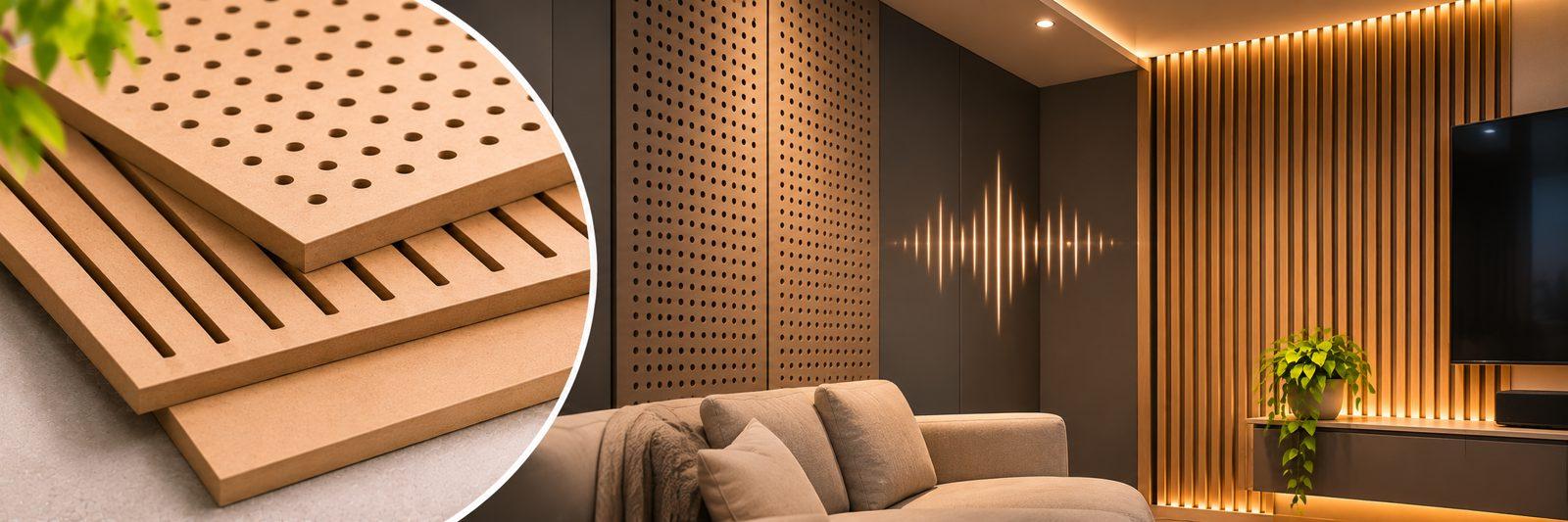
Know Your Materials
Enhancing Sound Quality: The Role of MDF in Acoustic Paneling
27 Nov 2026 · Kyzo
Good interior design is not just about how a space looks; it is also about how it sounds. In homes, offices, recording studios and commercial spaces, excessive echoes and sound reflections can affect comfort, communication and the overall experience of a room.
Acoustic paneling helps manage these issues by controlling how sound behaves within an enclosed space. Among the materials used in acoustic panel systems, Medium Density Fibreboard (MDF) is a popular choice because of its smooth surface, ease of machining and versatility in design.
From decorative wall panels to perforated acoustic surfaces, MDF can be incorporated into different acoustic solutions while complementing the interior design of a space.
Let's understand how MDF is used in acoustic paneling, the different panel designs available and where they can be applied.
1. Understanding Acoustic Paneling
Acoustic paneling refers to the use of specially designed materials and structures to manage sound within a room. When sound waves travel through an enclosed space, they can reflect off hard surfaces such as walls, ceilings, floors and glass. Excessive reflections may create echoes and prolonged reverberation, making conversations and audio less clear. Acoustic treatment helps manage these reflections through materials and panel designs that absorb or scatter sound.
Common acoustic panel materials include:
Fabric-wrapped acoustic panels
Acoustic foam
Mineral wool and other sound-absorbing materials
Wooden acoustic panels
Perforated MDF panels
Slatted MDF panels with acoustic backing
The right solution depends on the room's purpose, size, existing surfaces and acoustic requirements.
2. Why Is MDF Used in Acoustic Paneling?
MDF is an engineered wood-based board manufactured from wood fibres combined with resin and processed under heat and pressure. Although a solid MDF sheet is not inherently a sound-absorbing material, it can be used as part of an acoustic panel system. Its versatility makes it particularly useful for creating decorative and functional acoustic surfaces.
Some of its key advantages include:
Design Flexibility: MDF can be cut, routed, perforated and shaped into different patterns. This allows manufacturers to create slatted, grooved and perforated acoustic panel designs that combine visual appeal with acoustic functionality.
Smooth Surface for Finishing: MDF provides a relatively smooth surface that can be painted, veneered or finished with suitable decorative materials. This makes it easier to coordinate acoustic wall panels with furniture, wall finishes and the overall interior theme.
Precision in Manufacturing: MDF can be processed into consistent panel dimensions and detailed patterns using suitable machinery, including CNC equipment. This is useful when creating repeated perforations, grooves and geometric designs across larger wall or ceiling installations.
Versatility Across Interior Applications: MDF acoustic panels can be designed in different shapes, sizes and patterns, making them suitable for residential, commercial and specialised interior environments.
3. Applications of MDF Acoustic Panels
MDF-based acoustic panel systems can be used in several environments.
Home Theatres and Entertainment Rooms
Offices and Conference Rooms
Recording Studios
Auditoriums and Commercial Spaces
4. Important Design Considerations Before Choosing MDF Acoustic Panels
Selecting MDF for an acoustic application involves more than choosing a panel design. The complete panel construction and installation determine how effectively the system performs.
1. Panel Design: Consider whether perforated, slatted or grooved panels are suitable for the intended application. Different designs interact with sound differently.
2. Acoustic Backing Material: Many MDF acoustic systems rely on materials such as acoustic felt, mineral wool or other sound-absorbing layers behind the MDF surface. The backing material is an important part of the overall system.
3. Panel Thickness and Construction: Choose MDF thickness and panel construction according to the manufacturer's specifications and the intended design. Perforation size, spacing, cavity depth and backing configuration can influence acoustic performance.
4. Surface Finish: MDF panels can be finished with paint, veneer or other suitable decorative surfaces. Select a finish that complements the surrounding furniture and interior materials.
5. Installation and Placement: Acoustic performance depends on where panels are installed and how much wall or ceiling area they cover. Placement should be planned according to the room's acoustic requirements.
6. Fire and Safety Requirements: For commercial spaces and public buildings, check the applicable fire-safety requirements and obtain the relevant product documentation before selecting acoustic panel materials.
Conclusion
MDF offers considerable design flexibility for acoustic paneling, making it a useful material for creating perforated, slatted and grooved acoustic surfaces. While MDF itself is not a substitute for dedicated sound-absorbing materials, it can form an important part of an acoustic panel system when combined with suitable backing materials and carefully planned installation.
From home theatres and recording studios to offices, auditoriums and commercial interiors, MDF-based acoustic systems provide opportunities to combine functional acoustic treatment with decorative design.
MDF Boards
See AllFAQs
Can MDF be used for acoustic panels?
Yes. MDF can be used to manufacture perforated, slatted and grooved acoustic panels. These are often combined with sound-absorbing backing materials to improve their acoustic performance.
Does MDF absorb sound?
A solid MDF sheet is not an effective sound absorber by itself. However, perforated MDF panels combined with suitable acoustic backing can help absorb sound and reduce reverberation.
Are MDF acoustic panels suitable for home theatres?
Yes. MDF-based acoustic systems can be used in home theatres to help control sound reflections and reverberation when designed with suitable acoustic materials.
What is the difference between acoustic panels and soundproofing panels?
Acoustic panels generally improve sound quality within a room by managing reflections and reverberation. Soundproofing systems are designed to reduce sound transmission between spaces and require a different construction approach.
Where can I buy MDF boards in Bangalore?
You can explore MDF boards from Khidki and other established brands on KYZO at kyzo.in for furniture, interior applications and specialised projects.