Design Ideas
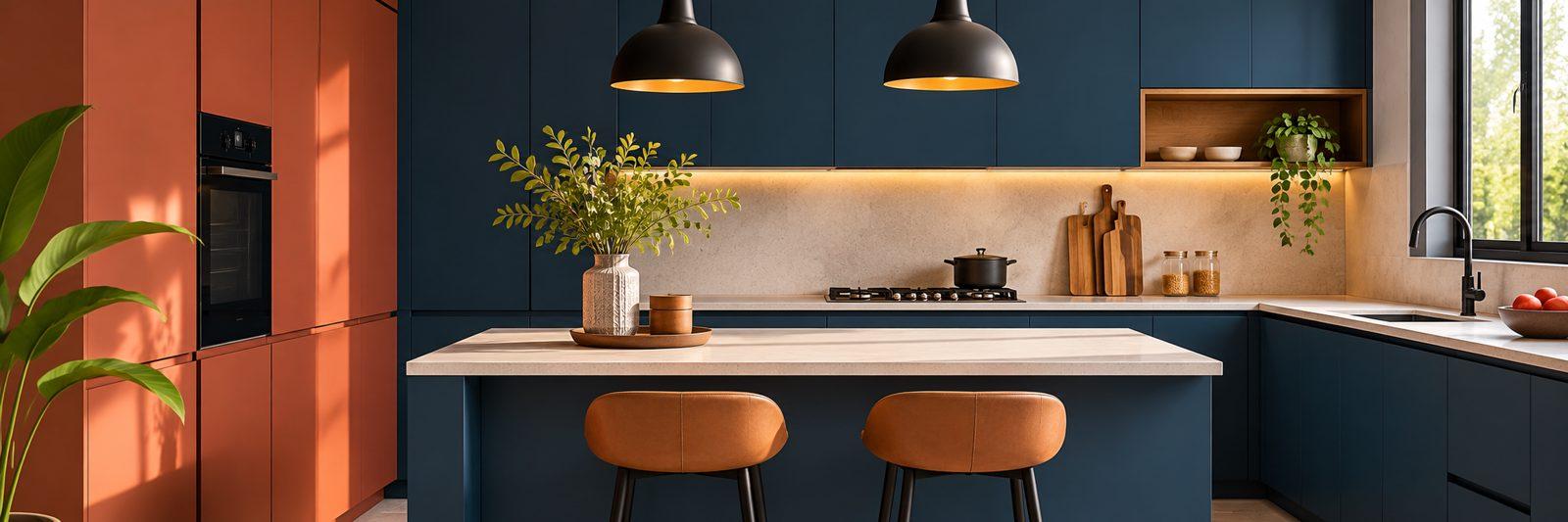
Bold Colors in Kitchens: Why 2026 is Moving Beyond White and Beige
23 Nov 2026 · Kyzo
For years, white, beige and grey have been popular choices for modular kitchens. Their neutral appearance makes them easy to coordinate with different interiors. However, kitchen designs are gradually becoming more expressive, with homeowners and interior designers exploring deeper colours, contrasting finishes and distinctive combinations. From navy blue cabinets and forest green shutters to terracotta accents and muted mustard tones, bold colours are creating new possibilities for kitchen interiors.
For designers and contractors in Bangalore, the key is not simply choosing a bright colour. It is about balancing shades, textures and materials to create a kitchen that feels distinctive without becoming visually overwhelming.
1. Why Are Bold Colours Becoming Popular in Modern Kitchens?
The kitchen is increasingly being treated as an important part of the overall home design. Instead of keeping every surface neutral, designers are using colour to introduce personality and create visual interest. Some popular approaches include:
Deeper Cabinet Colours: Navy blue, olive green and charcoal can give kitchen cabinets a distinctive appearance.
Warm Earthy Shades: Terracotta, rust and muted mustard introduce warmth into contemporary spaces.
Contrasting Finishes: Pairing bold shutters with lighter countertops or neutral walls creates visual balance.
Natural Combinations: Woodgrain finishes and stone-inspired surfaces can soften stronger colours.
The right colour combination depends on the kitchen's size, natural lighting, layout and the overall interior theme.
2. Popular Colour Combinations for Modern Kitchens
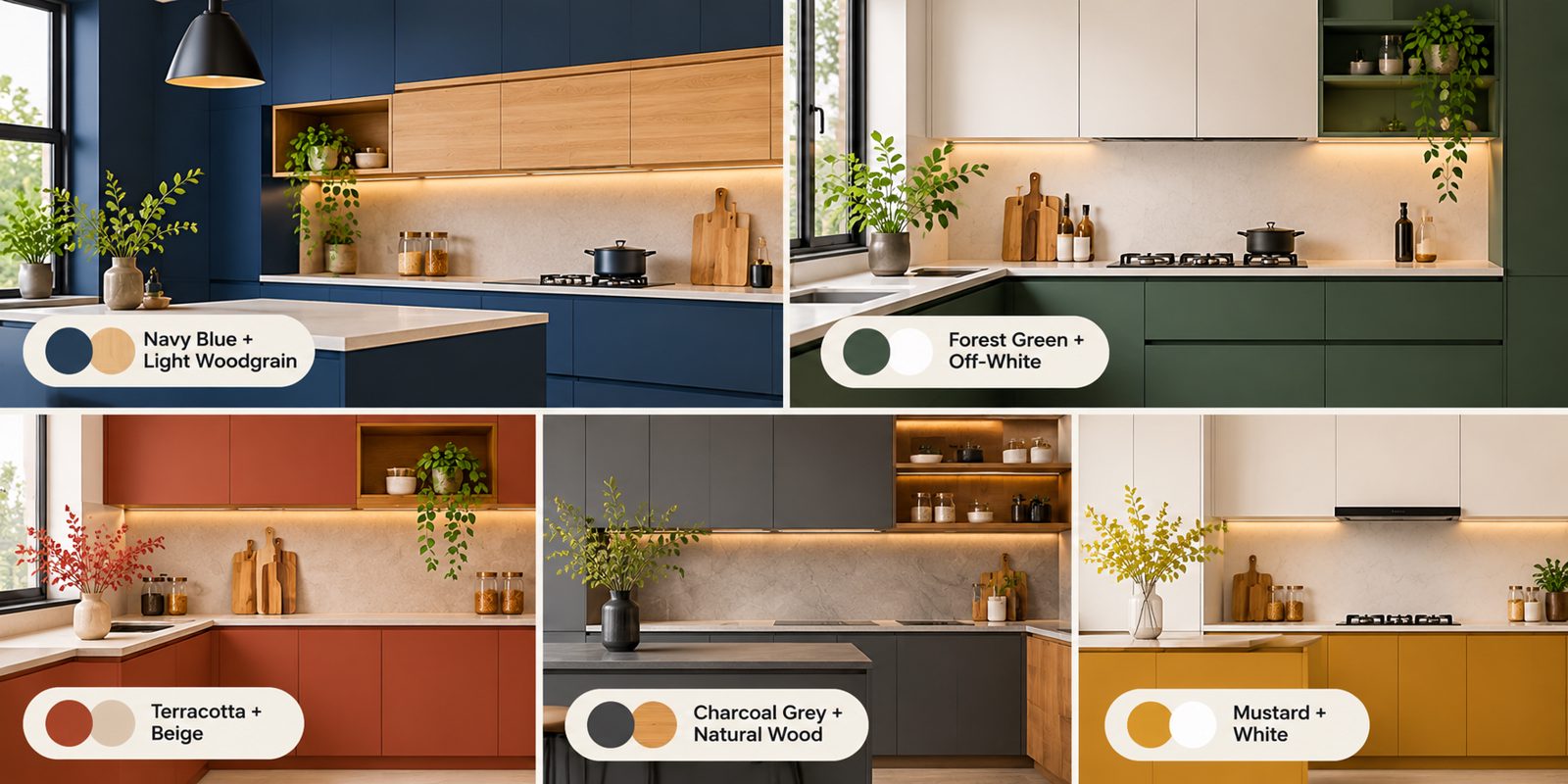
Choosing a bold colour becomes easier when it is paired with complementary shades and textures.
Navy Blue and Light Woodgrain: Deep blue cabinets paired with warm woodgrain finishes create a contemporary look without making the kitchen feel too dark.
Forest Green and Off-White: Green shutters with lighter countertops and neutral walls offer a balanced combination.
Terracotta and Beige: Earthy red tones work well with warm neutral surfaces, creating a more relaxed and inviting kitchen.
Charcoal Grey and Natural Wood: This combination is suitable for modern kitchens where designers want a darker, understated appearance.
Mustard and White: A muted mustard accent can introduce colour without dominating the entire kitchen.
3. Where Can You Introduce Bold Colours in a Kitchen?
Using bold colours across every cabinet is not always necessary. Designers can introduce them selectively to create a more balanced appearance.
Base Cabinets: Use deeper shades for lower cabinets while keeping upper cabinets lighter.
Kitchen Islands: A contrasting island colour can become a focal point in an open kitchen.
Upper Cabinets: Introduce colour through selected shutters while keeping the remaining surfaces neutral.
Accent Panels: Use bold laminates on specific sections to add visual interest.
Open Shelving: Combine coloured panels with woodgrain finishes for a coordinated look.
These approaches allow homeowners to experiment with colour while maintaining a practical kitchen layout.
4. Choosing the Right Materials for Bold Kitchen Finishes
The appearance of a coloured kitchen depends not only on the shade but also on the material and surface finish used. Here are some material options to consider:
Saket Mica Decorative Laminates: Decorative laminates offer a variety of colours, patterns and finishes for kitchen shutters and other furniture surfaces. Khidki's Saket Mica range can be explored for different kitchen design combinations.
HDMR Boards: HDMR boards are used in furniture applications that require a smooth, uniform surface for finishing. They can be considered for selected kitchen shutters and modular furniture components, depending on the product specifications and moisture exposure.
Khidki Plywood: Plywood provides the structural base for kitchen cabinets and shutters. The appropriate grade should be selected according to the location and expected moisture exposure. For moisture-prone applications, check the individual BWP or other suitable grade specifications.
The combination of the right board, laminate and edge finish helps bring the overall kitchen design together.
5. Tips for Using Bold Colours Without Overdoing Them
Bold kitchen colours can work across different layouts, provided they are planned thoughtfully.
Consider Natural Lighting: Darker colours may make poorly lit kitchens feel smaller, so account for available light.
Balance Strong Shades: Pair bold cabinet colours with neutral countertops, walls or flooring.
Limit the Colour Palette: Two or three coordinated shades are often enough to create a cohesive design.
Think About Long-Term Appeal: Consider whether the chosen colour will work with the rest of the home's interiors.
Check Physical Samples: View laminate samples under the kitchen's actual lighting before finalising the finish.
6. Explore Kitchen Materials on KYZO
KYZO brings together interior materials from its private labels, including Khidki, as well as other established brands. For kitchen projects, designers and contractors can explore:
Saket Mica Decorative Laminates for different colours and surface finishes.
Khidki Plywood for cabinet and shutter construction.
Khidki HDMR Boards for suitable furniture applications.
Other boards, laminates and hardware options from different brands.
Final Thoughts
Moving beyond white and beige does not mean every kitchen needs bright or dramatic colours. Even a single contrasting cabinet section, a coloured island or a combination of earthy tones can change the overall appearance of a space. The key is to choose colours that work with the kitchen layout, lighting and materials. With decorative laminates, plywood, HDMR boards and other interior products available through KYZO, designers and contractors can explore different combinations to create kitchens that reflect their preferred style.
FAQs
Are bold colours suitable for small kitchens?
Yes. Bold colours can be introduced selectively through base cabinets, accent panels or kitchen islands, while lighter shades are used elsewhere to maintain visual balance.
Are decorative laminates suitable for coloured kitchen shutters?
Decorative laminates are commonly used on kitchen shutters and furniture surfaces. Choose a finish according to the desired appearance and product specifications.
What materials can be used for modular kitchen cabinets?
Plywood and suitable MDF or HDMR boards are commonly used, depending on the furniture component, moisture exposure and product specifications.
Where can I explore kitchen laminates and boards?
You can explore decorative laminates, plywood, boards and other interior materials on KYZO at kyzo.in.