Know Your Materials
Beyond Looks: Why Core Gap Tolerance is the Most Overlooked Quality Check in Plywood
25 Nov 2026 · Kyzo
When selecting plywood for modular furniture, the quality of the outer surface is only part of the story. The internal construction of the sheet is equally important, particularly when materials are processed using CNC routers, edge banding machines and other precision equipment.
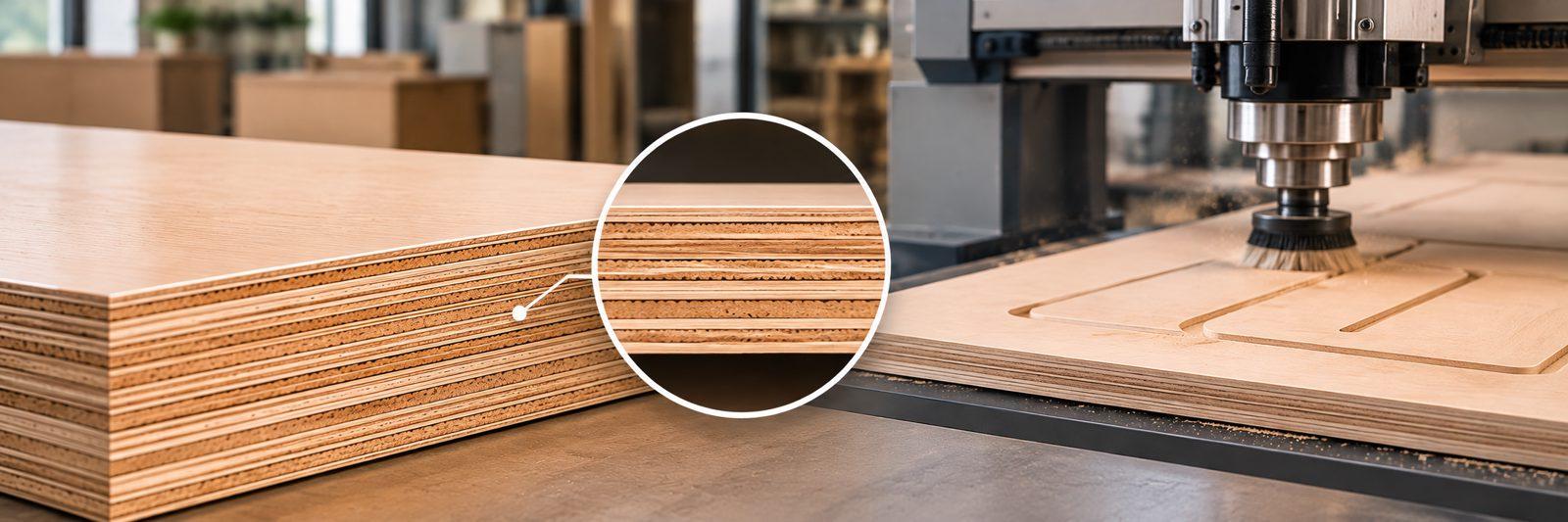
One factor worth paying attention to is the presence of gaps or voids between the veneer layers inside plywood. These internal gaps may not be visible when inspecting the finished surface, but they can become noticeable during cutting, machining and edge finishing.
For furniture manufacturers, carpenters and interior designers, understanding plywood core construction can help prevent avoidable fabrication challenges and improve material selection.
1. What Are Core Gaps in Plywood?
Plywood is manufactured by bonding multiple layers of wood veneer together. These layers form the internal core of the sheet. Core gaps, also known as internal voids, are spaces between veneer layers or within the core construction where the material is not continuous.
Their size, location and frequency can vary depending on the raw materials and manufacturing process.
While small internal voids may not always affect every furniture application, larger or poorly distributed gaps can create problems during machining and fabrication.
2. How Can Core Gaps Affect Furniture Manufacturing?
The internal construction of plywood can influence how the sheet behaves during different stages of furniture production.
CNC Cutting and Routing: When a cutting tool passes through an area containing an internal void, the resulting edge may be less consistent. Depending on the location and size of the gap, this can contribute to chipping or uneven edges.
Edge Banding: Core gaps near the edges of a sheet can affect the consistency of the surface available for edge finishing. Additional preparation may be required before applying edge bands.
Screw Fixing and Hardware Installation: Internal voids can affect the material available for fixing screws in certain locations. This is particularly relevant when installing hinges, drawer channels and other furniture hardware.
Lamination and Surface Finishing: An uneven or poorly prepared substrate can create finishing challenges. However, laminate bonding issues can also result from surface preparation, adhesive selection, pressure and application conditions, rather than core gaps alone.
3. Why Internal Core Construction Matters in Modular Factories
Modular furniture manufacturing involves processing multiple boards into components that must fit together accurately. When plywood sheets have inconsistent internal construction, manufacturers may encounter additional challenges during fabrication.
Some areas worth considering include:
Machining Consistency: Uniform internal construction can support more predictable cutting and routing.
Edge Quality: A sound core can help provide more consistent edges for finishing.
Hardware Fixing: Internal construction matters when selecting locations for screws and fittings.
Material Utilisation: Damaged or unsuitable sections may require additional inspection or rework.
Production Planning: Consistent material quality can make fabrication processes easier to manage.
For factories handling large volumes of plywood, inspecting material quality before production can help identify potential issues early.
4. Core Gaps and Calibration: What Is the Difference?
Core construction and calibration are two different aspects of plywood quality.
Core Construction refers to the internal arrangement and bonding of the veneer layers. It influences the consistency of the plywood's structure.
Calibration is a machining process used to achieve more uniform thickness across a plywood sheet. Calibrated plywood can be useful for modular furniture applications that require consistent dimensions. However, calibration does not automatically eliminate internal core gaps.
When selecting plywood for precision furniture, both internal construction and thickness consistency should be evaluated.
5. What Should You Check Before Buying Plywood?
Before purchasing plywood for CNC-based furniture manufacturing or other precision applications, consider the following checks:
Inspect Exposed Edges: Look for visible gaps, voids or uneven veneer construction.
Check Sheet Thickness: Verify the actual thickness against the specified dimensions.
Review Calibration: Confirm whether the plywood is calibrated and check its thickness specifications.
Evaluate Surface Quality: Look for visible defects, damage and irregularities.
Check Product Grade: Select MR, BWR or BWP plywood according to the intended application.
Request Product Documentation: Ask the manufacturer about core construction, quality checks and any specific core-gap tolerance claims.
Test Before Bulk Procurement: Where possible, evaluate sample sheets using the intended cutting and finishing processes.
These checks can help manufacturers assess whether the plywood is suitable for their production requirements.
6. Calibrated Plywood Options on KYZO
When choosing plywood for modular furniture, it is important to consider both the grade and the construction of the sheet. KYZO offers calibrated plywood options that can be evaluated for different furniture applications. Before selecting either product for precision machining, check its available thicknesses, calibration specifications and documented core-construction details.
KYZO brings together interior materials from its private label, Khidki, and other established brands, helping designers and furniture manufacturers explore material options for different project requirements.
Calibrated Plywood
See AllFinal Thoughts
Plywood quality is not determined by its outer appearance alone. Internal core construction can influence how a sheet performs during cutting, routing, edge finishing and hardware installation. For modular furniture manufacturers, paying attention to core gaps, veneer construction and thickness consistency can help identify potential material issues before fabrication begins.
Calibrated plywood and consistent core construction are both worth considering when selecting materials for precision furniture. By checking product specifications and inspecting sheets before bulk procurement, manufacturers can make more informed decisions and reduce avoidable production challenges.
FAQs
What are core gaps in plywood?
Core gaps are voids or spaces within the internal veneer construction of a plywood sheet. Their size and location can influence the consistency of the board.
Does calibrated plywood mean zero core gaps?
No. Calibration improves thickness uniformity but does not independently guarantee a void-free internal core.
Do core gaps affect screw-holding performance?
They can affect screw fixing in areas where internal voids are present. Board construction and the location of the fixing also matter.
Is zero core gap plywood necessary for every furniture project?
Not every application has the same requirements. However, consistent internal construction is particularly important where precision cutting, edge finishing and hardware installation are involved.